As is the tradition, when Sir Hector McNeill retired as Lord Provost of Glasgow in 1949 he had his portrait painted by the artist David Shanks Ewart. On its completion he gifted the portrait to Glasgow museums in 1950.
His paternal ancestry came from fairly humble, rural beginnings. His grandparents were Archibald McNeill, the son of farm servant John McNeill and his wife Flora McDonald,[1] and Flora McNeill, both of Campbeltown. They married there in April 1840, he was a labourer,[2] and she was the daughter, age 24, of shoemaker Archibald McNeill and his wife Jean McIntyre.[3] They lived all their lives in Campbeltown at various addresses, latterly in Queen Street where Flora died in 1883 [4]. Archibald also died there in 1895, age 78, his occupation being given as a distillery maltster.[5]
He had been a labourer until circa 1848 at which time he is recorded as being a maltster.[6] His job was to create malt by wetting barley on the floor of the malthouse, turning it over for several days to allow the barley to germinate and then drying it out. When that process was complete the malt would then be passed on to the distiller to make alcohol from the sugars that were produced. Campbeltown in the 19th century was a major fishing port for herring and was a significant producer of whisky. It’s therefore probable he worked in one of the many distilleries there. In the early 1800’s there were over thirty, by 1885 there were twenty one, producing two million gallons of spirits per annum. From farm labourer to a maltster in a thriving industry would have meant a significant improvement in the family’s situation. There are now only three distilleries in Campbeltown; Springbank, Glen Scotia and Glengyle.[7]
Between 1840 and 1855 Archibald and Flora had seven children, the first a daughter Catherine was born seven months after they married, Sir Hector’s father, yet another Archibald, was the seventh, and third boy, born on the 28th October 1855.[8] They had two other sons after 1855, Duncan, born c. 1859 and James born c. 1864.[9]
In the 1871 census son Archibald is recorded as a scholar, age fifteen,[10] which is perhaps surprising in that the majority of young men at that age would have been in employment unless from a well to do family. However, it may have been his father’s wish to have his children educated as well as possible, especially as he was illiterate at the time of Archibald’s birth in 1855. Where he was schooled has not been established however it may have been at Campbeltown Grammar School which was founded in 1686.[11]
Ten years later Archibald is still living with his parents, in Queen Street, as are brothers Hector and James. His occupation is given as a clerk, Hector is a tailor and James is a pupil teacher.[12]
He married Margaret Burns in 1884 by which time he was living in Glasgow at 396 Argyle Street, working as a mercantile clerk. Margaret, who was a milliner and lived at the same address, was age 29 and the daughter of Robert Burns, farmer, and Catherine McPhail, both deceased.
Like his paternal ancestry Sir Hector’s maternal forebears were farming folk. That however is as much as I have been able to establish directly about his maternal ancestry. His mother’s birth date has also proved elusive however there is one possibility which would also add more information about his maternal ancestry.
According to the 1901 census she was born in Kilmaronock in Dunbartonshire.[13] Her age at the time of her marriage to Archibald would mean she was born circa 1854. A search either side of 1855 produced only one result and that is for a Margaret Burns born illegitimately to Robert Burns of Little Finnery and Catherine (no surname) on the 26th July 1851. She was a servant to an Andrew Paton.[14]
Little Finnery was a farm in the parish of Kilmaronock, adjacent to which was another also referred to as Little Finnery.[15] In the 1851 census Little Finnery was occupied by widow Mrs. R. Burns, her forename being Margaret, and her two sons, James and Robert who was age 22. It’s clear the family worked the farm, which extended to 50 acres, as they employed a number of ‘outdoor servants’ to assist them.[16] The adjacent farm was of 40 acres and occupied by Andrew Paton and his family. He employed agricultural labourers and servants amongst whom was servant Catherine McPhail, age 20, born in Islay.[17] Strong circumstantial evidence I would say that these are Sir Hector’s maternal grandparents.
Mrs Burns was 60 years old when her granddaughter Margaret was born in 1851 and remained at Little Finnery at least until 1857 by which time she was joined as occupier by a William Burns. There is no reference to either son.[18] In 1861 there is a Mrs Margaret Burns, age 70 living in the village of Gartocharn, Kilmaronock with her granddaughter, also Margaret, age 9, further evidence that seems to support the contention above.[19]
Regarding Robert and Catherine no other evidence as to whether they got married, their whereabouts or deaths have been established. It’s more than likely for that time period, she would be deemed the ‘guilty’ party and perhaps had to leave the locality.
Archibald, shipping clerk, and Margaret continued to live in Glasgow and by 1901 were living at 70 Carrick Street, Back Yard with son (Sir) Hector age 9 and James, Archibald’s brother. They also had a boarder, Annie Cooper who was a book folder.[20]
In that census and in 1911 Hector is said to have been born in Motherwell his age in each case indicating he was born in 1892. Unexpectedly I have not been able to confirm that directly. There were no Hector McNeills born in Motherwell between 1888 and 1894 despite varying the spelling of the surname. Searching the whole of Lanarkshire produced two possibles, one was the son of a master mariner, the other was the son of a Clyde Trust labourer. The parents in each case had different forenames.
In 1908 Hector’s mother Margaret, died in the Western infirmary of a cerebral haemorrhage, she was 54 years old. At that time the family still lived in Carrick Street at number 77,[21] however by 1911 father and son had moved to 9 Buchanan Court in Lauriston in Glasgow where Archibald continued working as a commercial clerk and Hector was employed as an ‘iron turner’ in the engineering industry.[22]
Working in engineering with its strong involvement with the trade union movement of the day Hector would have got involved with the unions and the Labour party fairly early on in his working career. His ‘point of entry’ would likely have been as a local shop steward which led to a progression through the ranks of union and party. By 1924 he was President of the Glasgow Trades and Labour Council and also chairman of the Central Division Labour Party.
In the 1923 General Election the Labour party decided to support the communist candidate for Kelvingrove constituency, Aiken Ferguson. McNeil was chosen by the party as their contact point with the communists, and again in 1924 when there was a by election at Kelvingrove, Ferguson standing again as a candidate.[23] This occurred at a time when there was some talk of the communist and labour parties joining together which never happened, the support for Ferguson in 1924 being lukewarm because of what was considered to be his and others radical views.
Later that year the municipal elections were held in Glasgow and McNeill was chosen as the socialist candidate for the 14th (Anderston) Ward. His opponent, described as Moderate, was painter and decorator Edward Guest who had been a member of the council for 16 years.[24] On a 63% turnout of the electorate of 12,585 McNeill won with a majority of 388. [25]
The first meeting of the new council was held on the 7th November and McNeill was duly appointed to five committees, including Gas Supply and Water. He was also proposed as a governor of the Victoria Hospital but lost by four votes despite being supported by Bailie Mary Barbour, renowned for her leadership of the women of Govan in the rent strikes of 1915, Pat Dollan, future Lord Provost of Glasgow whose wife Agnes had been involved with Barbour during the rent strikes, and his two fellow councillors for Anderston.[26]
He was re-elected in 1927, with a similar majority,[27] served in the same committees as previously and in 1929 became depute water bailie in addition to joining the General Finance and Streets, Sewers and Buildings committees.[28]
His political career however stalled in the 1930 municipal elections when he lost his council seat. There were three candidates on this occasion representing the Moderate Party, Labour, (McNeill) and the Independent Labour Party (I.L.P.), the Moderate candidate Jonathan Harvey winning by 1285 votes. No doubt the left wing vote was split because of the two socialist candidates however the Moderate majority was greater than the vote for the I.L.P. candidate by 165 votes.[29]
During his first tenure as a councillor Hector’s father had died in 1926[30] and in 1927 he had married Grace Stephen Robertson, a milliner of Skelmorlie, age 35, Hector was described as an insurance agent living at 9 Alexandra Street. The marriage was by declaration in front of witnesses authorised by warrant issued by the Sheriff Substitute of Lanarkshire on the same day. Her father was a retired wholesale grocer,[31] her mother, Grace Simpson Stephen had died in 1914 at the age of 59.[32]
There were two sons of the marriage, Ramsay, born in 1929[33] and Hector John, born in 1934[34].
McNeill did not stand again for the council until 1932 when he was one of the labour candidates for the newly created Ward 38 (Yoker and Knightswood) with an electorate of 16,109. Each ward has three councillors, with one retiring for re-election each year. As ward 38 was new the election was for three council seats instead of the usual one.
There were eight candidates, three Socialist or Labour, three Moderate Party, and two I.L.P. Those elected were E. Rosslyn Mitchell (Soc.) – 4813 votes, Hector McNeill (Soc.) – 3077 votes and Elphinstone Dalglish (Mod.) – 2775.[35]
Rosslyn Mitchell had been a councillor for Springburn and also stood for parliamentary election in 1910 and 1922. In the 1924 General Election he stood as the Labour candidate for Paisley and beat the sitting member Herbert Asquith the ex-Liberal Prime Minister by 2,200 votes. He declined to stand again for parliament in 1929 citing business and personal difficulties. He died in 1965.[36]
Elphinstone Maitland Dalglish was a grocer, described as a wholesale egg merchant in the Town Council lists.[37] He died in 1942.[38] He had a very famous policeman son, of exactly the same name, who as Detective Superintendant was initially in charge of the investigation into the ‘Bible John’ murders in Glasgow which were never solved.[39] He finished his police career as Deputy Chief Constable of Glasgow and then Strathclyde.[40] He died in 1988.[41]
For the following twelve years or so McNeill served on a variety of committees which typically included municipal transport, parks, the Kelvin Hall, streets sewers and building, and health. He was also a Justice of the Peace from 1932.[42]
He became a Baillie in November 1933 remaining so for three years,[43] and in 1941 he joined the General Finance committee as city treasurer, his tenure in that role again being three years.[44]
His business address during his time as a council member from 1932 was given as 218 West Regent Street, his home address being initially Clarion Crescent in Knightswood.[45] In 1942 he moved to Larchfield Avenue, Newton Mearns where lived for the rest of his life.[46]
On the 9th November 1945 he was elected Lord Provost of Glasgow, beating his opponent for the office, James Grey, by 65 votes to 42.[47] As was normal for the time he was appointed Lord Lieutenant of the City of Glasgow in December 1945[48] and was knighted in June 1946.[49]
As well as his duties as Lord Provost he became involved with a number of other governmental organisations.
These included; in 1946 he was appointed to the Scottish Advisory Council for Civil Aviation by British European Airways (BEA) with the approval of the Secretary of State for Scotland,[50] and in 1947 he was nominated by the Minister of Transport to serve on the board of David MacBrayne, Ltd., primarily to monitor a contract between the government and the company to provide shipping services to the Western Highlands and Islands,[51]
He was also a member at various times of the Docks and Inland Waterways Executive of the Ministry of Transport,[52] the Clyde Navigation Trust and the Scottish Tourist Board.[53]
Other organisations he was a director of were the Economic Insurance Company which he joined the board of in 1949[54] and SMT Sales and Service Co. Ltd. (Motor Engineers).[55]
He died in 1952, age 60, in the Glasgow Royal Infirmary, his occupation given as company director[56]. His memorial Service was held in Glasgow Cathedral, the service conducted by Rev. Dr. Nevile Davidson. An address was given by former Secretary of State Tom Johnston who described him as a middle of the road traveller. A man of high ideals who laboured all his life to promote social ownership and cooperation between all his countrymen, and who had earned the respect of opponents and colleagues alike. At the time of his death he was the Chairman of the Glenrothes Development Corporation.[57]
The Trades House of Glasgow recorded his death in their minutes and noted that there was a deep loss sustained by the community through his death.[58]
His wife Grace died in 1954, age 62, from chronic bronchitis.[59]
[53] Bonavia, Michael R. (1987) The Nationalisation of British Transport: The Early History of the British Transport Commission 1948-1953. New York: Palgrave McMillan. p. 177. https://books.google.co.uk
This post was meant to be about another beneficent Glasgow clergyman, the Rev. James Oswald, however as I researched his family it became clear that the broader family history was perhaps more interesting. His brother was Richard Oswald, who became a merchant in London and also helped establish the treaty between the United States and Great Britain which ended the American War of Independence.
However, by no stretch of the imagination can Richard Oswald be described as a benefactor of Glasgow. As I hope to show he married into a rich family which brought him property in the Caribbean and the American colonies, included in which were plantations which used African slave labour. He dealt in sugar, tobacco and other commodities and helped provision the British army during the Austrian War of Succession and the Seven Years War. He was also responsible for the shipment of around 13,000 African slaves from Bance/Bunce Island, in the Sierra Leone river estuary, to the British colonies in America and the Caribbean.
The major part of this post will therefore depart from my usual objective of discussing benefactors of Glasgow. Why? I’m not really sure. Richard Oswald had lots of skills and business acumen, however it was all underpinned by his activity as a major slave trader. I suppose therefore I’m reacting to his significant part in the slave trade which involved him setting up a ‘slave trading post’ off the West African coast. Hopefully, therefore, these notes will help, even in a small way, dispel the myth that trading in African slavery was predominately an English activity, carried out from English ports, and that we Scots were above doing anything like that. It has become clear in recent years that Scots were at the heart of the machinery that made slave trading work and profitable. They were also responsible for some of the most appalling treatment of their ‘cargo’ as ‘it’ was shipped across the Atlantic.
In 1795 Robert Burns wrote “ A Man’s a Man for A’ That”, a sentiment that Oswald appears not to have shared. As it happens Burns also wrote a poem about Oswald’s wife Mary Ramsey, but more of that later.
The brothers’ great grandfather was James Oswald* of Kirkwall, Orkney. He had a son, also James, who at some point crossed over to Wick in Caithness where he became a bailie of the town. What his occupation was has not been established. He married Barbara Coghill and had two sons, James and George who both became clergymen, each marrying daughters of Richard Murray of Pennyland.[1]
*Lots of James Oswalds in this story!
James was born in 1654 and attended King’s College Aberdeen graduating as M.A. in 1674. Initially he was a session clerk and teacher in Thurso, however that was to change when he was admitted to the ministry in the parish of Watten in Caithness, an Episcopalian charge, in 1683. He remained at Watten until his death in 1698. He married Mary Murray in the year he became minister there and had two sons, Richard, born in 1687 and Alexander, born in 1694, and two daughters.[2] Both sons became very successful merchants in Glasgow. In 1751 they purchased the Scotstoun estate from the Crawford family and by 1759 they jointly owned Balshagray.[3] Notably they were also influential in their cousin Richard, son of George Oswald and the main subject of this post, becoming a merchant, he serving an apprenticeship with them.
George was born in 1664 and graduated M.A. from Edinburgh University in 1692. He became minister of Dunnet parish church, also in Caithness, in 1697, his charge being a Presbyterian one. He married his sister-in-law Margaret Murray and had five children of whom two were boys; James, (the beneficent clergyman) and Richard (the slave trader). He died in 1725.[4] One unusual episode he had to deal with during his ministry occurred in 1699 when two parishioners were accused of witchcraft. Having sought advice from the Presbytery he was advised to confront the accused with witnesses and report back. Nothing seems to have come of it as there is no further record of it in the Presbytery Records. This case also appears to have been the last recorded incident of witchcraft in Caithness.[5]
James Oswald – the Beneficent Clergyman.
George’s eldest son James was born in 1703. His early education is unclear with a suggestion that he attended King’s College, Aberdeen. It seems he did attend the divinity class given by William Hamilton at Edinburgh University in 1723. For how long and to what extent is not known.
He must however have attained a reasonable divinity education as when his father died the Caithness presbytery began the process of George succeeding his father at Dunnet in March 1726, ending with his ordination in August of the same year.
He remained at Dunnet, preaching in English and Gaelic, until December 1750 at which time he transferred to the parish at Methven in Perthshire. His move there was not without some difficulty. He was proposed by the parish patron for the position in 1748 however the Perth presbytery was against the appointment, not necessarily on a personal basis but because they were against patronage and would have preferred the parish lay elders to have decided their next incumbent. It took two years and various rebukes from the church hierarchy, including civil charges of intimidation, before a General Assembly committee ‘made it happen’. This led to a number of the congregation seceding from the church.
From about that time, and for the rest of his life, he began to write about the church, its purpose, methodology and potential for schism, gaining a reputation as an ‘ecclesiastical politician’. His first publication was in 1753 relating to church authority and obedience however it was in the mid-1760s that he began to make his name as an author. In that decade he was an unsuccessful candidate for the chair of ecclesiastical history at Glasgow University, in 1765 he wrote ‘Scripture Catechism, for the Use ofFamilies’ and a year later he wrote perhaps his most important work ‘An Appeal toCommon Sense in Behalf of Religion’, which was well received at home and abroad, and went to a second edition in 1768 and a second volume in 1772.[6]
During this period, he became moderator of the General Assembly in 1765 [7] and was awarded the degree D.D. by Glasgow University in the same year.[8]
He married Elizabeth Murray of Clairdon in 1728 and had seven children, four of whom were boys. Two of the sons, George and Alexander, became noted merchants in Glasgow, George inheriting the Scotstoun estate circa 1766 from his second cousins Richard and Alexander who both died without issue, brother Alexander buying the Shieldhall estate in 1781.[9] It’s also perhaps worth mentioning that brother Alexander had a son, another James born in 1779, who, like his father, was a merchant and became one of two MPs for Glasgow in 1832, following the Reform Act of that year.[10] His statue is in the north east corner of George Square in line with the Cenotaph; Oswald Street in the city centre is named after him.[11]
Elizabeth died in 1746, not long after the youngest son Andrew was born in 1745. In 1749 James married Margaret Dunbar, there being no children of this second marriage.[12]
He continued at Methven until 1783 at which time he left his charge to go and live with his son George at Scotstoun. He had continued to write, having more time to do so from the early 1770s due to ill health resulting in his pastoral duties being carried out by others. For most of his life he and his brother Richard had exchanged letters, some of which dealt with his writings, particularly concerning a follow up to ‘Appeal’. His brother also helped him financially at Methven when his stipend was reduced as a result of the patron and one other heritor being in financial difficulties.
He died in 1793 and left £100 to the Glasgow Society for the Sons of Clergymen (still in existence and now known as the Glasgow Society for the Sons and Daughters of Clergymen), and a similar amount to its Edinburgh counterpart.[13] He also donated £20 to the Glasgow Merchants House.[14] Small amounts it would seem but in today’s terms these sums equate to somewhere between £25,000 and £2.4 million.[15]
Richard Oswald – Merchant, Diplomat, Slave Trader.
James’ brother Richard was born circa 1705. Where he began his education is not known however around 1725, shortly after his father died, he became apprenticed to his cousins Richard and Alexander who, as previously stated, were successful merchants in Glasgow trading in tobacco, sugar and wine. He became their factor in the British colonies in America and the Caribbean travelling as required to satisfy the needs of the business, supplying planters and collecting payment and chasing debts. On his return to Glasgow in 1741 he became a partner in his cousins’ company.
During the War of the Austrian Succession (1740-1748) Oswald had made large profits, presumably for his cousins’ company and himself, resulting in him moving to Philpot Lane in London in 1746 where he continued to deal in tobacco and sugar and eventually, horses and slaves. Between 1756 and 1758, helped by a family member who was on the government Treasury board, and other influential London based Scottish merchants, he began provisioning the British army with bread, wagons and so on, which led to him supplying the army in Germany with bread during the Seven Years War (1756-1763).[16] His contracts and commissions during this war netted him a remarkable £125,000, worth £18 million to £2 billion today.[17]
His business activity had clearly grown in size and scope between these two wars. He was making lots of money but where did his working capital come from? No doubt some of it would come from the usual sources of the day and his profits, however two events during this period I believe, significantly changed the level of capital he was able to apply to his business.
Firstly, he began shipping African slaves to the American and Caribbean colonies around 1748 and then he married an extremely rich heiress in 1750.
Looking at his marriage first; he married Mary Ramsay in St Martins in the Fields, London on the 17th November 1750.[18] She was the daughter of Alexander Ramsay of Jamaica and Jean Ferguson, whom he had met in Jamaica whilst working for his cousins. Alexander was an extremely wealthy plantation and hence slave owner living in Kingston. He had died in 1738, his will being probated in Jamaica in that year and referring to him owning one hundred and one slaves, fifty one adult males and fifty adult females, all valued at £3727.[19] Mary as an only child inherited her father’s estate on his death which included properties in the West Indies and the Americas.[20] Through his wife therefore Oswald had access to a significant fortune. As it turned out there were no children of their marriage.
By the time of his marriage he had already got involved in the trading of slaves. In 1748 he and other London based Scottish merchants, the partnership being known as Grant, Sargent and Oswald, purchased Bance Island from the Royal African Company of England which had built a fort there around 1672.
The fort was rebuilt, and the infrastructure put in place to obtain slaves from the mainland. They did not venture into the interior themselves but imported guns, alcohol, and cloth which they exchanged with local chieftains for native captives they brought to the island, these captives resulting from local ‘induced’ wars.
Oswald was the lead partner in the venture whose main customers were the rice planters of Charlestown, South Carolina. By 1756 he had established a close business and personal relationship with Henry Laurens, a very rich rice planter and slave dealer there. From Bance island the slave ships would carry around three hundred slaves per ship plus ivory and camwood. Laurens sold the slaves locally and from his commission on the sale, would purchase rice to send to London along with the ivory and camwood. By this process both men increased their wealth exponentially.[21], [22] Between 1748 and 1784 around thirteen thousand men, women and children were shipped from Bance Island to the Americas.[23]
However, the American War of Independence was to change the relationship between Oswald and Laurens, both becoming active participants in ending it.
In the meantime, following the end of the Seven Years War in 1763 Oswald began putting by now his vast fortune to more use by acquiring land for both business and personal use. He purchased four plantations in the Caribbean amounting to 1,566 acres, and 30,000 acres of land in Florida. Over the next twenty years he also purchased the Auchincruive estate in Ayrshire (7,000 acres) and the similarly sized Cavens estate in Kirkcudbright and Dumfriesshire. His main residence became Auchincruive House which was built in 1767 to a design provided to the previous owner James Murray by Robert Adam.[24]
His business activities however began to suffer following the rebellion of the British colonists in America which resulted in the American War of Independence beginning in 1775. As a direct consequence he reduced his overseas activities and also divested himself of his property in Virginia and Florida. He always had been to some extent politically active, but not in any formal way, simply through friends in Whitehall. The war changed that as he began writing papers on a variety of subjects, including military, using his business background and experience of the Colonies and their businessmen to inform his writing.[25] One particular memorandum written in 1781 was entitled ‘The Folly of Invading Virginia, The Strategic Importance of Portsmouth and the need for Civil Control of the Military’ from which we may be able to assume where his sympathies lay.[26]
It was at this time that his friendship with Henry Laurens came to the forefront of settling the Independence War. Laurens had become President of the Continental Congress (the provisional government of the rebellious colonies) during the war and had then been appointed American envoy to Holland. On his way there c.1780/81 he was captured by the British Navy, imprisoned in the Tower of London and charged with high treason. In 1781 Oswald paid bail of £50,000 to release him from the Tower, Laurens remaining in London until he was exchanged for the British Commander in America, c.1782.[27]
Probably because of his American contacts, in April 1782 Oswald was appointed by the Prime Minister Lord Shelburne as his diplomatic agent to ‘treat for peace’ with the American delegation in Paris which consisted of Benjamin Franklin, John Adams, John Jay and subsequently Henry Laurens. Oswald was the main negotiator for the British side but was considered by some to be too lenient towards the Americans and too ready to concede issues. However, by November 1782 a provisional treaty was agreed and signed by the four Americans and Oswald. The formal treaty (Treaty of Paris) was signed on the 3rd September 1783, being essentially the same as the provisional one signed the year before.[28]
“At least in part, United States Independence was negotiated between a British slave trader and his agent for rice growing slaves in South Carolina”[29]
Oswald returned to London, sharing his time between his town house at 9 Great George Street and Auchincruive, relinquishing the management of his business to other family members.
A year after the treaty was signed he died at Auchincruive on the 6th November 1784. His wife had life rent of the estate until her death in 1788 at which time his nephew George Oswald of Scotstoun was left one part of it, the other going to Richard Oswald’s great-nephew Richard Alexander Oswald.[30]
Richard and Mary were buried in the Oswald vault at St. Quivox parish church,[31] however she had died in her London home and it was the last part of her journey home to Ayrshire that prompted Robert Burns to write a poem about her which he called ‘Ode, Sacred to the Memory of Mrs. Oswald of Auchincruive’.
Some of the sentiments expressed in the poem came from Burn’s previous knowledge of Mary when he lived in her neighbourhood where her tenants and servants detested her with a passion. However, it was the arrival of her funeral cortege at Sanquhar inn, depriving him of lodgings there for the night thereby forcing him to ride on a further twelve miles on a tiring horse, himself fatigued and the weather stormy and snowing, which pushed him to write a scathing account of her life. The lines below illustrate his feelings about her as he wrote the poem after his arduous journey.[32]
‘Laden with unhonoured years
Noosing with care a bursting purse
Baited with Many a deadly cure.’
and
‘Pity’s flood there never rose
See these hands, ne’er stretch to save
Hands that took but never gave
Keeper of Mammon’s iron chest
Lo, there she goes, unpitied and unblest
She goes, but not to realms of everlasting rest!’
The rest of the poem suggests she is destined for hell, along with her husband.[33]
When slavery was abolished in Britain in 1833, Richard Alexander Oswald, the grandson of James Oswald, the beneficent clergyman, was awarded compensation of £5,645 18s 6d for the loss of the 297 slaves he owned jointly with his wife in Jamaica.[34]
Today this would be worth somewhere between £500k and £27.5m.[35]
[3] Smith, John Guthrie and Mitchell, John Oswald. (1878). The Old Country Houses of the Old Glasgow Gentry. 2nd ed. Glasgow: James Maclehose and Sons. LXXXVII Scotstoun. http://gdl.cdlr.strath.ac.uk/smihou/smihou087.htm
[6] Sher, Richard B. and Stewart, M. A. ‘Oswald, James .(1703-1793)’. In: Oxford Dictionary of National Biography. Oxford: Oxford University Press. https://www.oxforddnb.com/view/article/65580
[13] Sher, Richard B. and Stewart, M. A. ‘Oswald, James .(1703-1793)’. In: Oxford Dictionary of National Biography. Oxford: Oxford University Press. https://www.oxforddnb.com/view/article/65580
[14] Ewing, Archibald Orr and others. (1866) The Merchants House of Glasgow. 2nd ed. Glasgow: Bell & Bain. p. 589.
[18] Marriages (PR) England. Westminster, London. 17 November 1750. OSWALD, Richard and RAMSAY, Mary. FHL Film Number 561155. https://www.ancestry.co.uk/
[30] Edinburgh University Library Special Collections, GB237 Coll – 521. Correspondence of the Oswald Family of Auchincruive, including Richard Oswald. https://archiveshub.jisc.ac.uk/
In October 1950 Mrs. Helen Percy presented to Glasgow Museums a portrait of her mother by the artist John Graham Gilbert.
Her mother was Elizabeth Bannatyne, wife of Glasgow merchant John Jarvie who was heavily involved in trade with China and the Far East during the middle of the 19th Century.
This report looks at both their family backgrounds and how he became a ‘foreign merchant’ particularly in Singapore, but not always successfully as we will see.
John Jarvie’s grandfather was William Jarvie, a coal master of Pollokshaws. He married Agnes McGie in 1754[1] and they had at least four children, three girls and one boy. They were all baptised on the same day in 1762 in the parish of Eastwood, their birth dates ranging from 1755 to 1762.[2]
William was a coal master at a time in Scotland when essentially miners were no better than slaves and were legally tied to mines (bondsmen) by an Act of Parliament (1606), unless their master agreed to release them. Another Act in 1672 authorised “coal masters, salt masters and others, who had manufactories in this kingdom to seize upon any vagabonds or beggars wherever they can find them, and to put them to work.” [3] This state of affairs continued until the beginning of the 19th Century. For more on the history of coal mining in Scotland the Scottish Mining Website (http://www.scottishmining.co.uk/index.html) is an excellent source of information.
Whilst his main occupation is given as coal master he also farmed at various locations within Sir John Maxwell’s Pollok estate, including at Clogholes farm, PolIocktoun and Northwoodside. His will, he died c.1767, details the value of equipment and crops at each of these locations and others, and also includes the value of tools, equipment and instruments associated with his coal works at Napiershall. When household goods, furniture and so on are included his estate was valued at £334 2s., his wife Agnes being his named executrix.[4]
His son Robert was born in July 1758 at Shaws.[5] His initial schooling has not been established, the only certainty being that he did not attend the University as the matriculation or graduation records do not include his name. It’s probable he worked for his father at some stage but again nothing has been found to indicate what he did in the early part of his life.
He eventually became a merchant in Glasgow however his first appearance in the Post Office Directories does not occur until 1806 where he is described as a merchant with James Hamilton, Sen. and Co., his home address being given as Charlotte Lane,[6] which is where he lived until 1815.[7] He remained with that company for the rest of his active life, eventually becoming a partner in the business and others. He was also a director of the Chamber of Commerce from 1829 until 1833.[8]
He married in 1814 Jane Milligan,[9] the daughter of William Milligan, merchant, and Jean Ure of Fareneze Printfield, Neilston.[10] They had seven children, five sons and two girls. The family home was at Maxwellton Place from 1815 until 1824, at which time they moved to 19 Carlton Place.[11]
Robert died at home on the 28th April 1843. At the time of his death his movable estate was valued at £8378 9s 3d,[12] equivalent to £800,000 today by simple RPI changes, in terms of economic power it equates to several millions of pounds.[13]
However, that does not tell the whole story of his wealth. In 1830 he set up a Trust Disposition and Settlement which dealt with his heritable estate in Glasgow plus what is described as his ‘stock in trade’ including his ‘share of same’ from other co-partneries with which he was involved. Included was property/ground bounded by the west of Robertson Street and the Broomielaw, subjects in Queen Street, property in Carlton Place and other properties and ground.
Eleven trustees were named whose function was to manage the trust to support his wife and children and if need be, their children. There are three codicils to the deed the last of which in 1836 names his eldest son William as a trustee.[14]
Four of the five sons, William, Robert, James and John , more of whom later, all matriculated at the University between 1829 and 1837,[15] and all became merchants in due course. There is no evidence to suggest the youngest son Alexander became a merchant or attended the University, however there was a bit of a mystery about his whereabouts after 1856 which led to a petition for him to be presumed dead.
In 1885 his sister Agnes, the widow of Isaac Buchanan, resident in Hamilton, Canada, sought to have Alexander presumed dead in accordance with the 1881 Presumption of Life Limitation Scotland Act. In her submission to the Lords of Council and Session she stated that her brother had sailed from New York to Melbourne, Australia in 1856 and had not been heard of since. She also stated that he was unmarried at that time.
Deposited in a bank account in his name was his share of his father’s estate which was finally settled in 1865, plus other bequests and interest accrued amounting to £1644, all of which had remained untouched since the account had been set up.
Judgement was given in her favour and Alexander was presumed to have died on or about the 23rd February 1864. Why that date is not made clear however a reasonable guess would be that since he was presumed to have died before his father’s estate was settled then his share would automatically go to his siblings, otherwise it should go to any heirs (children) he may have had which would have entailed a difficult search for proof.
In the event with Alexander being declared dead Agnes, as the only surviving sibling, was confirmed as executrix and sole beneficiary of his estate in January 1886.[16]
When I tried to find out if he did die in Australia only one possibility arose in that an Alexander Jarvie died in Wellington, New South Wales in 1902. The data from the NSW web site is sparse but intriguingly the first names of the parents quoted in the document were Robert and Jane. Pure coincidence or could this have been the long lost brother?[17]
The other brothers stories are also somewhat interesting. The oldest, William, started on his own account as a commission agent in 1839 in Robertson Street. By 1846 he was a partner in Rainey, Jarvie and Co. and by 1848 he was declared bankrupt and had his assets sequestrated.[18] He never appears in the Post Office Directories again.
Very little is known about James except he died in 1867 at Lismore, Argyllshire. The registration document describes him as a merchant, no other source has been found to confirm that, and that he died of ‘excessive drinking’.[19]
A little more is known about Robert. He undoubtedly was a merchant but it’s not obvious with whom in Glasgow. The most likely is Buchanan, Hamilton and Co. as in 1860 a partnership was established in Shanghai between Buchanans, Robert Jarvie and William Thorburn, which was styled Jarvie, Thorburn and Co.[20] This partnership lasted until Robert’s death in Shanghai in 1866.[21]
John Jarvie, the second youngest of the brothers was born in 1822.[22] He matriculated at the University in 1837[23] and by 1842 he was in Singapore donating 20 Spanish dollars for raising a spire and tower for St. Andrew’s Church there![24]
He was essentially to remain there for the next eighteen years, travelling around the Far East as required by business. In 1848 he was acting as an agent for the Glasgow firm of Hamilton, Gray and Co.[25]; in 1852 he became a partner of the company in Singapore and also of Buchanan, Hamilton and Co. in Glasgow.[26] During that period, he travelled to and from Hong Kong,[27]Siam[28], India,[29] and Australia.[30] His travels continued to these destinations and others until he returned home circa 1860.
In 1854 he was appointed Consul for Denmark in Singapore, an appointment he fulfilled well on behalf of that country.[31] In 1858 he travelled to Siam accredited to the Royal Court there by King Frederich VII of Denmark. His task was to negotiate a treaty with the ‘first and second kings’ of Siam and their ‘magnates’. As he was well known to all of the personnel involved he had no difficulty in concluding a treaty of friendship and commerce along the same lines as other countries had done before.[32]
He played his part in Singapore civic life serving on several grand jurys between 1849 and 1854. In 1853 he served on a jury whose calendar comprised of eighteen cases including two murders.[33] In November 1850 he was elected Master of the local Masonic lodge from the position of Senior Warden.[34]
In 1859 in recognition of his service to Denmark he was created a Chevalier of the Royal Order of Danebrog by the King of Denmark.[35]
He returned to Glasgow in 1860 and married Elizabeth Bannatyne in November of that year. She was the daughter of Andrew Bannatyne, writer, and Margaret Millar.[36]
Her paternal grandfather was Dugald Bannatyne[37] a prominent citizen of Glasgow in the early part of the 19th century. He was a stocking weaver who was influential in the development of George Square around 1800. He formed, along with Robert Smith Jr and John Thomson, the Glasgow Building Company.[38] He was able to attract English capital to what was a speculative venture through Thomson’s brother in law, an English stocking weaver called Johnston.[39] By 1804 the Square had buildings on each side which were being described as ‘elegant, particularly on the north (side).’[40]
He was appointed Post Master General in 1806 and was secretary to the Glasgow Chamber of Commerce from 1809 to 1830.[41] In 1817 he was a member of a committee of the Glasgow Merchants House charged with bringing about the building of a new Merchants Hall.[42] Dugald’s wife was Agnes Stirling who was a descendant of the Stirling family of Drumpellier.[43]
John and Elizabeth had 11 children, six boys and five girls. Sadly, with two exceptions they all died before they were forty five years old, the exceptions being Helen the donor of the painting and her sister Agnes. Two died as infants, four as teenagers, two of whom, Andrew and Robert, died from pneumonia within 8 days of each other in 1878.[44][45] The other five all married, more of which later.
John continued in partnership with Buchanan, Hamilton and Co. and others this time based in Glasgow, the family living at 13 Park Circus.[46] Unfortunately this situation did not last for very long. In 1865 the funds of all the partnerships he was involved with and those of the individual partners were sequestrated. The companies involved were Buchanan, Hamilton and Co., Jarvie, Thorburn and Co., and Hamilton, Gray and Co., the partners being Walter Buchanan, William Hamilton, John Jarvie and George Henderson.[47] The process of dealing with creditors lasted until 1876.[48]
John however around 1866/67 had already formed another partnership with George Henderson apparently unaffected by the sequestration problems they both faced. They were known as Jarvie, Henderson and Co, in Glasgow [49] and J. Jarvie and Co. in Shanghai. However, this was another venture which ended up in failure, the funds of the companies and those of the partners being sequestrated on the 2nd June 1873.[50]
There is no evidence that he formed any other partnerships following that with George Henderson, as from 1874 on his entries in the Post Office Directories simply state that he is a merchant.[51][52]
He died intestate in 1879 at 9 Lyndoch Crescent, the family home since 1866. When he died his occupation was recorded as wine agent.[53] The value of his estate was eventually given as £642 5s 7d.[54] John’s wife Elizabeth died in Bournemouth in 1924. Her estate was valued at £9690 16s, probate being granted to her daughters Agnes Bannatyne and Elizabeth Helen Percy.[55]
The five surviving children of John and Elizabeth were George Garden Nicol, Norman Alexander, Helen (Elizabeth Helen), Agnes and Susan Evelyn.
George married Sarah Elizabeth Tuffin at St Peter’s Limehouse in 1900. He was 29 years old; Sarah was 22. At the time of his marriage his occupation was given as mariner.[56] They had a son in 1903, George Norman who died a few months after his birth, George’s occupation this time given as ‘independent’.[57] Not much more has been established about him except that he died on the 10th May 1907, age 36 at the Deddington Arms, a beer house in Poplar, Middlesex. He left estate valued at £30.[58] He seems to have been the landlord of the establishment as two years later his wife was still at the same address.[59]
Norman spent some of his life in the military. In 1895 he was given a commission as a second lieutenant in the 3rd/4th battalion of the Highland Light Infantry.[60] As a lieutenant he acted as aide de camp to Colonel Thackery, his battalion commander, when the Duke of Connaught, son of Queen Victoria and the battalion’s honorary chief, visited the battalion in June 1899.[61]
He eventually attained the rank of temporary captain and was an Instructor of Musketry when he was seconded to a line battalion in South Africa early in 1900 at the start of the second Boer War.[62]
It seemed his military career was progressing satisfactorily however it came to an abrupt end a few months later whilst he was in South Africa. In the London Gazette of the 1st May 1900 it was announced that Captain N.A. Jarvie was to be appointed second lieutenant.[63] I have not been able to ascertain what caused this demotion but worse was to follow. About seven weeks later his new appointment was cancelled[64] to be followed by his dismissal from the army in November, the official Gazette notice stating that he was ‘removed from the army, Her Majesty having no further occasion for his service’.[65]
Norman married Edith Nora Ferguson in Huntingdon in 1903.[66] By the 1911 census they were living in a private apartment in Llandudno with no family; Norman’s occupation was given as actor working on his own account.[67] You can’t help but get the impression that he had led a rather nondescript life since his dismissal from the army.
However, there are two postscripts to his army life. In 1905 there was a further entry in the London Gazette about him which stated that the paragraph about his removal from the army in the November 1900 issue was to be substituted by one that simply said that Captain (temporary) N.A. Jarvie has retired from the Military.[68]
The other is that three weeks after Great Britain declared war on Germany on the 4th August 1914 Norman enlisted as a private with King Edward’s Horse at the age of 41. He did not see any active service as he died on the 13th December of that year at a hospital in Hounslow, cause of death not stated but seemingly from an accident or an illness. The army documentation which records his enlistment and his death also records that his estate was not entitled to any war gratuity as he had not served for six months.[69] His estate was valued at £11.[70]
Agnes married chartered accountant John Allan Bannatyne in 1894[71]. He was the son of her mother’s brother John Miller Bannatyne, that is, they were first cousins.[72] He was a partner in Bannatyne, Bannatyne and Guthrie when the company was founded in 1892[73] but after 1902 he is no longer mentioned in the directory and the company name has changed to Bannatyne and Guthrie.[74] What he did subsequently is unknown. They had a son Ninian John, born in 1896, who was killed in action in France in 1917.[75] John died intestate in Sierra Madre, California in 1909, leaving £688 2s 7d, probate granted to Agnes twenty years after his death.[76] She died in Durban, South Africa in 1949.[77]
Susan Evelyn married Duncan Forbes Robertson Aikman in 1903 in Westminster, London.[78] He was a member of the Robertson Aikman family of Ross House and New Parks House Leicester. His father was Hugh Henry Robertson Aikman whose brother Frederick Robertson Aikman[79] won a V.C. during the Indian Mutiny in 1858.[80] The marriage was childless and did not last very long as Susan died at the age of 32 in 1908.[81] He died in 1920.[82]
Helen, the donor of the painting was born in 1868.[83] She married Edward Josceline Percy in 1907 in London.[84] He was the son of Hugh Josceline Percy who descended from Hugh Percy, the 1st Duke of Northumberland (great grandfather), via the 1st Earl Beverly (grandfather),and the Rev. Hugh Percy, Bishop of Rochester and then Carlisle, his father.[85] Edward died in 1931, probate granted to Helen, his estate being valued at £7898.[86] She died in 1954.[87] There were no children of the marriage.
In the Necropolis in Glasgow the family lair has fifteen family names inscribed on its headstone starting with Robert Jarvie and his wife Jane Milligan. They are followed by John Jarvie and his wife Elizabeth Bannatyne and all of their children. Not all of them are buried their however, the exceptions being George Garden Nicol Jarvie and Susan Evelyn Jarvie.[88]
When it’s considered that Robert Jarvie left a very significant fortune when he died in 1843 it’s difficult not to come to the conclusion that none of the adult sons took advantage of the start in business that gave them. In fact, the family fortune went in reverse due their combined lack of the business acumen shown by their father.
On a sadder note, despite having eleven children there are no direct descendants of John Jarvie and Elizabeth Bannatyne.
[1] Marriages (OPR) Scotland. Govan. 11 November 1754. JARVIE, William and MCGIE, Agnas. 646/ 10 379. www.scotlandspeople.gov.uk
[2] Births (OPR) Scotland. Barony. 23 September 1755, JARVIE, Margaret, Shaws. 1 July 1758, JARVIE Robert, 12 June 1760, JARVIE, Agnes and 23 June 1762. JARVIE, Janet. 562/ 20 30. www.scotlandspeople.gov.uk
[24] Singapore Free Press and Mercantile Advertiser. (1842). The Free Press, Church subscriptions. Singapore Free Press and Mercantile Adviser. 10 November 1842. p. 3d. http://eresources.nlb.gov.sg/newspapers
[38] Kellet, John R. (2002)’ Property Speculators and the Building of Glasgow, 1780-1830.’ In: Pacione, Michael, ed. The City: The City in Global Context. London: Routledge. p.79.
[54] Testamentary Records. Scotland. 16 June 1880. JARVIE, John. Inventory. Glasgow Sheriff Court. SC36/48/92. www.scotlandspeople.gov.uk
[55] Testamentary Records. Scotland. 8 May 1925. JARVIE, Elizabeth. National Probate Index (Calendar of Confirmations and Inventories), 1876-1936. 1925, p. J10. https://www.ancestry.co.uk
[56] Marriages (SR) England. Limehouse, Tower Hamlets. 30 July 1900. JARVIE, George Garden Nicol and TUFFIN, Sarah Elizabeth. England, Church of England Marriages and Banns, 1754-1932. https://www.ancestry.co.uk
[57] Births (SR) England. Poplar, St Stephen, Tower Hamlets. 10 May 1903. JARVIE, George Norman. London, England, Church of England Births and Baptisms, 1813-1917. https://www.ancestry.co.uk
[58] Testamentary Records. England. 18 July 1907. JARVIE, George Garden Nicol. Principal Probate Registry. Calendar of the Grants of Probate. 1907, p. 325. Collection: England & Wales, National Probate Calendar (Index of Wills and Administrations), 1858-1995. https://www.ancestry.co.uk
[66] Marriages (SR) England. Huntingdon. 1st Qtr. 1903. JARVIE, Norman Alexander and FERGUSON, Edith Nora. England & Wales, Civil Registration Marriage Index, 1837-1915. Vol. 3b, p. 630. https://www.ancestry.co.uk
[67] Census. 1911. Wales. Llandudno cum Eglyws-Rhos. RD 632, ED 05. Piece: 34540; Schedule Number: 119. https://www.ancestry.co.uk
[70] Testamentary Records. England. 14 June 1916. JARVIE, Norman Alexander. Principal Probate Registry. Calendar of the Grants of Probate. 1916, p. 285. Collection. England & Wales, National Probate Calendar (Index of Wills and Administrations), 1858-1995. https://www.ancestry.co.uk
[71] Marriages (SR) Scotland. Hamilton, Lanark. 4 December 1894. BANNATYNE, John Allan and JARVIE, Agnes Marion. 647/ 195. www.scotlandspeople.gov.uk
[76] Testamentary Records. Scotland. 26 November 1929. BANNATYNE, John Allan. National Probate Index (Calendar of Confirmations and Inventories), 1876-1936. 1929, p. B15. https://www.ancestry.co.uk
[77] Testamentary Records. England. 30 June 1950. BANNATYNE, Agnes Marion. Principal Probate Registry. Calendar of the Grants of Probate. 1950, p. 317. Collection. England & Wales, National Probate Calendar (Index of Wills and Administrations), 1858-1995. https://www.ancestry.co.uk
[78] Marriages. (SR) England. London. 1st Qtr. 1903. AIKMAN, Duncan Forbes Robertson and JARVIE, Susan Evelyn. England and Wales Civil Registration Indexes, 1837-1915. Vol. 1a, p. 768. https://www.ancestry.co.uk
[81] Deaths. (SR) England. Faringdon, Berkshire. 2nd Qtr. 1908. AIKMAN, Susan Evelyn R. England & Wales, Civil Registration Death Index, 1837-1915. Vol. 2c, p. 157.https://www.ancestry.co.uk
[82] Deaths. (SR) England. Faringdon, Berkshire. 4th Qtr. 1920. AIKMAN, Duncan Forbes Robertson. England & Wales, Civil Registration Death Index, 1837-1915. Vol. 2c, p. 318.https://www.ancestry.co.uk
[83] Births. (SR) Scotland. Anderston, Glasgow. 13 March 1868. JARVIE, Elizabeth Helen. 644/8 529 www.scotlandspeople.gov.uk
[84] Marriages. (SR) England. London. 1st Qtr. 1907. PERCY, Edward Josceline and JARVIE, Elizabeth Helen. England and Wales Civil Registration Indexes, 1837-1915. Vol. 1a, p. 868. https://www.ancestry.co.uk
[86] Testamentary Records. England. 8 August 1931. PERCY, Edward Josceline. Principal Probate Registry. Calendar of the Grants of Probate. 1931, p. 679. Collection. England & Wales, National Probate Calendar (Index of Wills and Administrations), 1858-1995. https://www.ancestry.co.uk
[87] Testamentary Records. England. 11 April 1954. PERCY, Helen Elizabeth. Principal Probate Registry. Calendar of the Grants of Probate. 1954, p. 377. Collection. England & Wales, National Probate Calendar (Index of Wills and Administrations), 1858-1995. https://www.ancestry.co.uk
The Inverclyde Bequest Fund was established over one hundred and ten years ago. Its aim was to distribute annually the income of the fund to merchant seamen charities and aged and infirm seamen, specifically in the following manner:
Seamen and seamen charities in Scotland – 2/5 share
Seamen and seamen charities in Liverpool and Manchester – 1/5 share
Seamen and seamen charities in Belfast – 1/5 share
Seamen and seamen charities in New York and Boston – 1/5 share.
The bequest was made by the second Baron Inverclyde, George Arbuthnot Burns. The Burns family had long been associated with merchant shipping, the family firm being G and J Burns, established by the second Baron’s grandfather. They were also involved with the founding of the Cunard line and had a family connection to David Macbrayne, a co-founder of what eventually became Caledonian Macbrayne or Calmac as they are currently known.
The Burns Family
The Burns family can be traced back, at least, to Doctor John Burn of the school at Airth, who married Jennet Young on the 4th March 1741.[i] They had one child, a son John, who was born on the 19th February 1744.[ii]
John matriculated at Glasgow University in 1766[iii] and four years later became assistant minister to the Rev. Laurence Hill of Barony Church. On Hill’s death in 1773 he was chosen as his successor being ordained there on the 26th May 1774.[iv] He was awarded an D.D. degree by Aberdeen University in 1808[v] and remained minister at Barony until his death in 1839.[vi]
He married Elizabeth Stevenson in January 1775 and in due course they had nine children, seven sons and two girls (both named Elizabeth).[vii] Another source claims ten children, a third daughter also called Elizabeth being born in 1788 [viii] This last daughter’s birth however I have not been able to confirm. Four sons survived into adulthood, all of whom had distinguished careers. The last born Elizabeth reached adulthood and married David Macbrayne, more of which later.
It’s the youngest son George and his descendants that are of interest to this research however the other three sons are worthy of comment.
John Burns, the eldest child was born in 1775.[ix] In due course he was to become the first Regius Professor of Surgery at Glasgow University. He began his career in medicine when licensed by the Faculty of Physicians and Surgeons of Glasgow, becoming an apothecary and surgeon’s clerk at the Glasgow Royal Infirmary in 1792.[x] In 1796 he became a member of the Faculty[xi] and in 1797 he began giving private lectures on anatomy, surgery and midwifery from rooms in Virginia Street. In 1799 he became Professor of Anatomy and Surgery at the newly established Anderson College’s medical school in addition to continuing his private classes.[xii] He was joined by his brother Allan in these classes who at the age of sixteen, was directing the use of the dissecting rooms involved with the anatomy lectures.[xiii]
He remained in that position until 1815 when he became Regius Professor, nominated for the position by the University Chancellor the Duke of Montrose. The University conferred on him the degrees of C.M. (surgery) and M.D. in 1817 and 1828 respectively. He remained in the Regius Chair and continued with his private work for the rest of his life although his anatomy activity had to cease as he had become involved in a body snatching controversy.[xiv] He wrote a number of medical text books perhaps the most well known being ‘Principles of Midwifery’, published in 1809, [xv] and in 1830 was elected a Fellow of the Royal Society (F.R.S.).[xvi]
He married Isabella Duncan in 1801 and they had four children, Isabella dying shortly after the birth of the fourth child Allan.[xvii]
He died on the 18th June 1850 when the paddle steamer the ‘Orion’ sank off Portpatrick on its way to Glasgow from Liverpool.[xviii] Ironically the ship belonged to G & J Burns Ltd, the shipping company established and owned by his brothers George and James.[xix]
Allan Burns, the fourth child was born in 1781[xx]. He was also the second boy to be called Allan although with a slightly different spelling. His career paralleled John’s to some extent in that he became a renowned anatomist and medical writer. He apparently began his medical career working with his brother from the age of fourteen. As indicated above he joined with his him in his private lectures and in due course took on the anatomy classes from him when he was prevented by the city authorities from carrying out anatomical activity (the body snatching issue).
In 1804 he went to London intending to join the Army Medical Service and in December of that year he obtained the necessary qualification for membership of the Royal College of Surgeons in London. However, he did not pursue his military objective but went instead to St Petersburg on the recommendation of a Dr Creighton, to set up an ‘English plan’ hospital at the request of Empress Catherine. After an initial trial period of six months he returned to Glasgow put of by the pomposity and barbarism of Russian culture.[xxi]
He re-joined his brother John in his lectures and it was during this period he took on the anatomy classes following his brother’s ‘grave robbing’ problems. Like John he wrote a number of medical text books and between them the brothers created a large collection of mummified body parts which in the fullness of time ended up in the University of Maryland.[xxii]
Unfortunately, he was not to enjoy a long life practising his medical skills. He died unmarried age thirty two, on the 29th June 1813.[xxiii]
James Burns was the eighth child born in 1789.[xxiv] Commerce and shipping, not medicine, along with his brother George, was to be his professional occupation. Initially they set up as general merchants in Glasgow in 1818.[xxv] By 1824 the business was located in Miller street, as general merchants at number 49, and as agents for Liverpool Traders at number 45, employing David Hutcheson there, whom we will meet again. At number 39 were the Liverpool Shipping offices, the brothers listed as agents. At the Liverpool end of this enterprisee the agents and owners of the business were Mathie and Theakstone, the partnership owning six sailing vessels, the Edinburgh, Glasgow, Liverpool, Manchester, Mersey and the Java.[xxvi]
He and brother George continued to expand their shipping interests, adding Northern Ireland destinations to their routes. In many respects they were like the Burrell brothers George and William although the prime mover in the Burns’ shipping business was George whilst James remained more of a merchant. By 1839 they had met Samuel Cunard which subsequently led to the formation of the Cunard Line in 1840. There is much to explore re the Burns brother’s shipping businesses which I’ll continue with when discussing George Burns.
Around 1839 James purchased the estate of Kilmahew in Dunbartonshire having previously bought the neighbouring estate of Bloomhill. As he got older he became more interested in estate improvement eventually retiring from business to devote his time to that activity.[xxvii]
He married Margaret Smith in 1825[xxviii] but the marriage was short lived as she died in 1830 of consumption[xxix]. His second wife was Margaret Shortridge whom he married in 1835[xxx], both marriages being performed by his father John. They had one child John William Burns born in 1837.[xxxi] Margaret Shortridge also pre deceased him dying in 1860[xxxii], James died at Kilmahew Castle in 1871.[xxxiii]
George Burns
Figure 5. Etching of Sir George Burns, 1889.
The grandfather of George Arbuthnot Burns, was born in the Barony parish on the 10th December 1795.[xxxiv] His schooling began privately with a Mr. Angus as his tutor in grammar, simultaneously attending a writing school, tutored by a Mr. Stevenson. Following this preparatory education, he then attended the Grammar School (which became the High School of Glasgow) leaving there, after circa seven years, in 1812.[xxxv]
His first employment was with the New Lanark Cotton Spinning Company which had been started by David Dale in 1784. His role in the main seems to have been as messenger to various banks including Robert Carrick’s Ship Bank. During this time, he also involved himself with ‘recreational’ studies, attending lectures on chemistry at Glasgow University.[xxxvi]
In 1816 his father John was admitted a Guild Brother and Burgess of Glasgow, George becoming a Burgess on the same day through his father.[xxxvii]
He left New Lanark in 1818 and for a short while worked unpaid as a clerk for Andrew Grant and Co. before joining with his brother James later that year to establish their general merchants business. George was the more vigorous and commercially minded of the brothers and travelled all over the UK, including Northern Ireland, in pursuit of business. These travels resulted in him meeting a number of individuals who in due course would result in the nature of the brother’s business activity moving towards shipping.[xxxviii]
One such individual was Hugh Matthie who along with Theakstone, as previously mentioned, ran six sailing vessels between Glasgow and Liverpool. Mathie and Theakstone’s agents in Glasgow had been John and Alexander Kidd. However, during 1824 both of these gentlemen died leaving Matthie looking for a new agency . George Burns pursued this opportunity with Matthie which led to G. and J. Burns becoming Matthie’s Glasgow agents. It was during this time that David Hutcheson, an employee of the Kidd brothers, joined the Burns company having been recommended by Matthie. Not long afterwards Theakstone decided to retire and George Burns bought his share of the six sailing vessels thereby gaining a 50% ownership of his first shipping line. Thereafter James generally ran the merchants business under the name J. and G. Burns whilst George ran the shipping business under G. and J. Burns.[xxxix]
George very early on was keen to use steamships rather than sailing smacks and it was shortly after his partnership with Matthie was established that they began their routes to Northern Ireland, initially to Belfast in 1824 then to Londonderry and Larne using wooden paddle steamers. The first was the 100hp, 296 ton ’Fingal’ which went into service in 1824, followed by the ‘Eclipse’, the ‘Belfast’ and the ‘Rapid’ in 1825.[xl]
He was also determined to employ steam ships on the other routes that G. and J. Burns had an interest in, either as agents or owners. To that end he devised a plan to use steam ships on the Glasgow to Liverpool route which was at that time serviced by a fleet of eighteen sailing smacks. Fundamentally his plan was to remove as many of these smacks as possible from the route replacing them with steam ships.
As indicated previously he owned six of these vessels along with Matthie, competitors James and Thomas Martin were agents for a company also owning six. After some haggling and persuasion, the Burns, Mattie, Martin ‘consortium’ won the day and became joint owners of the twelve smacks which they then sold off. A partnership was set up with the company being known in Liverpool as ‘Matthie and Martin’ and in Glasgow as ‘G. and J. Burns and J. Martin’.[xli]
The first steamship of the new company was the ‘Glasgow’ a 280 ton,100 hp wooden paddle steamer whose maiden voyage to Liverpool was on the 13th March 1829. It was followed very quickly by two other wooden paddle steamers, the ‘Ailsa Craig’ similar in size and power, and in 1830 by the larger ’Liverpool’ whose tonnage was 397 ton and was powered by a 150hp engine.[xlii]
Other routes which G. and J. Burns were involved with all eventually were serviced by steamers, including the Glasgow and Highland (1832) all paddle with one exception the ‘Loch Fine’ in 1847 which was screw driven, the Glasgow and Firth of Clyde (1846) all paddle, and the Mediterranean /Le Havre (1853) all screw driven.[xliii]
In 1851 the Highland shipping activity was taken over by David Hutcheson, their employee from the early days, and his brother Alexander. They were joined by the Burns’ nephew David Macbrayne,[xliv] the son of their sister Elizabeth and David Macbrayne who had married in 1810.[xlv] So began the journey to the Caledonia Macbrayne shipping line.
In the midst of this George’s greatest venture was to occur, namely his involvement with the founding of the Cunard Line. Before I deal with that it is perhaps appropriate at this juncture to say something about his family life.
On the 10th June 1822 he married Jane Cleland in the Barony Church, the ceremony being performed by his father[xlvi]. Jane was the daughter of James Cleland, the Superintendent of Public Works in Glasgow. Cleland was a well known chronicler of Glasgow inhabitants, including censuses of Glasgow in 1819, 1821 and 1831, and associated statistics[xlvii] and is responsible for the current layout of Glasgow Green which was established between 1816 and 1826.[xlviii] There is also a tenement building opposite the Glasgow Royal Concert Hall called the Cleland Testimonial which was designed by David Hamilton and built in 1836 by public subscription in recognition of his service to the city. Cleland lived in the building until he died in 1840.[xlix]
George and Jane had seven children, three boys and four girls, only three of whom survived into adulthood. They were, his heir John, and father of George Arbuthot Burns, who was born on the 1st July 1829,[l] James who was born on the 28th of July 1832[li] and their first born Margaret who was born on the 10th August 1824.[lii] Margaret died relatively young in 1854 having been married for five years, leaving her husband and three young children.[liii]
The Cunard Line
In 1838 the Admiralty were interested in establishing a steamship mail service between Britain, Canada and the United States. To that end invitations to tender to provide that service were sent to a number of shipping organisations, including G and J Burns. It seems that initially George was disinclined to get involved in this Atlantic activity however that was to change.[liv]
Samuel Cunard, a Nova Scotian born in 1788, became aware of the desire to set up a steamship based mail service across the Atlantic and decided to apply . He travelled to Britain early in 1839 and by the 11th of February had submitted his tender to the Admiralty.
The essence of his tender was as follows:
“To provide steamboats of not less than 300hp to convey mail between Halifax (Nova Scotia) and England plus steamboats of not less than 150hp to distribute the mail locally.”
His tender also stated his ships would be ready by the 1st May 1840 and that the cost to the Admiralty of running the service was to be £55,000 per annum, the contract to run for ten years.
He then met the Scottish ship builder Robert Napier and agreed a contract with him, signed on the 18th March, for three ships, each of 960 tons and 375hp, to cost £32,000 per ship.
The Admiralty response was positive and the contract with them was signed on the 4th May 1839. It was to be for seven years, with two sailings per month beginning on the 4th June 1840, and each vessel would carry a naval officer. In addition, each ship should be ready at any time to carry four naval officers and ten ratings.
Whilst the contract negotiations had been going on Napier had come to the conclusion that for the service to be carried out all year round and in all weather conditions, larger and more powerful ships would be required, without which the venture would fail. When Cunard indicated that he had no more capital to invest Napier offered to put him in touch with other merchants who might support the venture.
One such individual was James Donaldson of the City of Glasgow Steam Packet Company which had merged with G. and J. Burns around 1830. The company had been set up by Donaldson and David MacIver to compete with Burns on a number of his routes but had not been particularly successful. The terms of the merger were that Burns would have three fifths of the revenue generated by the new company and control of the business, Donaldson and MacIver two fifths.
A meeting between Donaldson, Cunard, Burns and MacIver was held on the 10th May to discuss the possibility of additional capital being secured, with MacIver expressing his opposition. The next morning a further meeting took place, less Donaldson, during which agreement in principle seems to have been achieved. However, Burns stated the project was so large that other investors would be needed to raise the required capital and that would take time, he thought around a month.
In the event it took four days to raise the money and a contract was drawn up with Burns and MacIver having a half share in the mail contract and in the steam ships for an investment of £270,000. The name of the new business was the ’British and North American Royal Mail Steam Packet Company’, the precursor to the Cunard Line. A co-partnery, called ‘The Glasgow Proprietary in the British and North American Steam Packets’ was also established between Burns, MacIver and the eighteen other investors that had helped provide the funds. The Admiralty also agreed to increase what they would pay for the service to £60,000 per annum.[lv]
Four wooden paddle steamers were then built as per the Napier specification, each around 1200 tons and 440hp, the first of which was the ‘Britannia’ to be followed by the ‘Acadia’ the ‘Caledonia’ and the ‘Columbia’.[lvi]
Figure 7. The Paddle Steamer Britannia. From Bygone Liverpool by Henry S. and Harold E. Young. Liverpool: Henry Young and Sons.
The ‘Britannia’ was built by Robert Duncan of Port Glasgow and was launched on the 5th February 1840. She made her maiden voyage on the 4th July arriving in Boston on the 19th, her entry into service late by about a month.[lvii] The build of the other ships was also behind plan, the second of which being delivered late autumn, the third in November, with the fourth in January of the following year.
Consequentially further discussions with the Admiralty led to an agreement that the twice monthly sailings would be delayed until the autumn and that during the winter months there would only be one sailing per month, each sailing lost reducing the company’s fee by £1,000.[lviii]
As the business developed and grew Cunard based himself in London, Burns in Glasgow, commuting to London and Liverpool as required, and MacIver in Liverpool. The original shareholders in the Burns/MacIver co-partnery were gradually bought out until the business was fully in the hands of the families of Cunard, Burns, and MacIver, each holding one third of the shares. In 1845 David MacIver died, his share going to his brother Charles, whose sons in due course followed him. In 1865 Sir Samuel Cunard died, having been created a baronet in 1859,[lix] and was succeeded by his son Edward, to be followed in 1869 by his brother William.
Burns however, was to live a very long life. He retired in 1858, his son John taking on his role in the business, and sharing his father’s holding in Cunard with his brother James.[lx] This was after a period of intense competition, from about 1850, on the Atlantic route from the Collins Line, an American company. Despite some early setbacks the British company eventually prevailed, Collins finally going out of business in 1858.[lxi]
On his retirement Burns bought the estate of Wemyss Bay on the south side of the Firth of Clyde. He built Wemyss House as the family home, the architect being James Salmon of Glasgow.[lxii]
Throughout his life he was a pious man, perhaps unsurprising as he was a son of the manse. What is unexpected is that in 1838 he became an Episcopalian, essentially a member of the Church of England, particularly drawn to the evangelicals of that church. He was to remain so for the rest of his life as was his wife Jane.[lxiii] From their earliest days as Episcopalians they were active and supportive of their local congregation and minister and that was to continue when they moved to the Wemyss estate.
Jane died on the 1st July 1877 at Wemyss House. She was 83.[lxiv] Almost from the day she died George determined to build an Episcopal church in memory of his wife. He engaged the architect John Burnet to design it and two years later it was complete. It was built in the Gothic style using local red sandstone, its first service, conducted by the Rev. John W. Bardsley of Liverpool, being held on the 15th June 1879[lxv]
Figure 8. Episcopal Church at Wemyss Bay from a post card.
George was made a baronet in June 1889[lxvi] and died the following year on the 2nd June, his son John succeeding to the baronetcy and the Wemyss estate. Throughout his life he was a vigorous man, a thinker, interested in doing things differently, and deeply religious. It’s therefore sad to note the cause of his death was given as ‘senile debility’ and that his death was registered by his head gardener.[lxvii]
John Burns/Sir John Burns/1st Baron Inverclyde.
Figure 9. Sir Jogn Burns. The Mitchell Library Glasgow Reference 920.04BAI
John Burns matriculated at Glasgow University in 1845, age 16.[lxviii] There is no record of him graduating, one source however has it that he took the general arts degree.[lxix] He subsequently joined the family business around 1850[lxx] and by 1858 he had taken on his father’s role in the business when he retired in that year.
By 1865 the policy making and planning essentially was in the hands of John and Charles MacIver. The Civil War in America had ended in that year and the Atlantic passenger trade particularly with immigrants, which had suffered greatly during the war, began to recover. As it did, so did the competition.[lxxi]
Burns and MacIver over the next few years took various steps to counter this, essentially by restructuring their business to make better use of their shipping assets and capital, particularly when it came to purchasing bigger and more modern ships made of iron then steel and screw driven.[lxxii]
In 1855 the British and Foreign Steam Navigation Company was formed servicing Mediterranean and Levant ports. Previously ships on these routes did so under the informal banner of Burns and MacIver however it was recognised that to ensure the best use of capital, maintain and improve profitability, and to ensure funds were properly allocated for the purchase of new ships, a more formal structure was required.
In 1866 further changes to company structure took place with the joining together of the British and Foreign Steam Navigation Company and the original 1840 company of Burns, Cunard and MacIver, the British and North American Royal Mail Steam Packet Company. The new structure operated as the British and North American Steam Packet Company, the shareholders being John Burns, James Burns his brother, Charles MacIver, Sir Edward Cunard and his brother William, each family having one third of the shares.[lxxiii] In addition the Burns family continued to run their own shipping company G. and J. Burns.
In the midst of all this activity John married Emily Arbuthnot in 1860.[lxxiv] She was the daughter of George Clerk Arbuthnot and his first wife Agnes Rait. John and Emily had five children, two boys who in due course were heavily involved in the family shipping businesses, and three girls. The eldest boy was George Arbuthnot Burns born in 1861[lxxv], who was the eventual donor of the Inverclyde bequest, his brother was James Cleland Burns born in 1864.[lxxvi]
The business restructuring continued into the 1870’s culminating in 1878 with the creation of the Cunard Steam Ship Company Ltd., the company share value being £2 million, in today’s terms somewhere between £200 million and £3.6 billion[lxxvii], of which the Burns, Cunard and MacIver families took up £1,200,000. In 1880 the remaining shares were successfully offered for public subscription, following which John Burns became the first chairman of Cunard.[lxxviii]
John’s two sons started off in the family company and by the late 1880’s he was less involved in the daily operation of both the Cunard Line and the Burns company, with the deputy chairman of Cunard David Jardine taking on more of his chairman duties and son George running the Scottish and Irish mail services.[lxxix]
He led a full public life in addition to his business responsibilities. He was a Justice of the Peace in the county of Renfrew and honorary lieutenant in the RNVR.[lxxx] In 1890 he became a deputy lieutenant of the county of Renfrew[lxxxi] and in 1894 he became a deputy lieutenant of the county of the city of Glasgow.[lxxxii]
He was a keen yachtsman owning at least three: the ‘Matador’(1879), the ‘Jacamor’(1882) and the ‘Capercailzie’(1883), all iron hulls and screw driven.[lxxxiii] As might be expected he was a member of a number of yachting club’s including the Royal Yacht Squadron.
In 1878 he sailed to Reykjavik, Iceland on the yacht ‘Mastiff’ with his wife, his sons George Arbuthnot and James Cleland. On board were a number of guests including the author Anthony Trollope. On the passage out they went via the Faroes, returning via the Hebrides. A record of the trip was written by Trollope and Illustrated by Mrs Hugh Blackburn.[lxxxiv]
In keeping with his sailing enthusiasm and his role with the RNVR he played a significant part in the setting up a training ship scheme which was established on HMS Cumberland.
He was also something of a philanthropist in that he financially supported a number of charitable organisations including the Eastpark Children’s Home in Glasgow and the Training Home for Nurses, both being remembered in his will. He was an Episcopalian like his father and was fully supportive of his local church St Silas.[lxxxv]
In 1897, in Queen Victoria’s Diamond Jubilee Honours list he was conferred with a peerage and became Baron Inverclyde of Castle Wemyss.[lxxxvi]
He died at Castle Weymss on the 12th February 1901, cause of death recorded as exhaustion resulting from spinal sclerosis[lxxxvii]. Sadly, the next entry the registrar made was to record the death of John Burn’s wife Emily who died at home two days later on the 14th February, cause of death being cardiac failure.[lxxxviii]
He was succeeded by his eldest son George Arbuthnot Burns who became the second Baron Inverclyde and inherited the Wemyss estate.
I have not been able to establish where George attended school nor is there any obvious evidence that he went to university. However, the Times of London states that he had a liberal education and that he had subsequently toured India, China and Australia[lxxxix] before staring work in the family business of G. & J. Burns along with his brother James. That may have been as early as 1880 however by 1882 they are both recorded in the Post Office directory for that year as being with the family firm[xc]. The two brothers had been left equal shares in G & J Burns in their father’s will however as time went on George’s focus seems to have been directed more towards Cunard whilst James essentially ran the family shipping business.
In 1886 George married Mary Fergusson, the daughter of Hickson Fergusson who was a yarn merchant.[xci] They married in St Mary’s Episcopal Church; she was 20 years old and he was described as a steamship shareholder.[xcii] Unfortunately, the marriage was childless.
His father had all but relinquished his role as Cunard chairman to David Jardine and when he died in 1901 Jardine was elected chairman along with George as his deputy.[xciii] He however did not stay as such for very long, deciding to retire in 1902, at which time George took on the role.[xciv]
His first AGM as Chairman was held on the 10th April 1902. It was not wholly an easy time for him as it took place during a period when Cunard’s business performance was questionable, resulting from low freight and passenger rates due to the competitive nature of the business. Whilst it was agreed to pay a dividend of 4% on the paid up capital a number of critical comments were made.
A Mr. Japp stated that the company was so badly run that the only remedy would be to dispose of it to a purchaser who would give shareholders the par value of the shares. A second shareholder, from Glasgow, said basically the same thing and encouraged the directors to put any purchase offers to the shareholders for their consideration. Another suggested that Lord Inverclyde should move to Liverpool from Glasgow as he could not see how “any business could be carried on with the pivot residing in Glasgow”[xcv]
Things however were to improve and by the time of the next AGM on the 8th April 1903 the chairman’s report, and leadership, was greeted on several occasions with cheers, apart from the same shareholder from Glasgow having a gripe about the cost of new ships.[xcvi] The Atlantic rates war, however, was to continue for some time.
Like his father, and indeed his brother James, he held a number of public and business appointments. He joined the Glasgow Chamber of Commerce in 1887[xcvii] and was also a member of the Merchants House of Glasgow for a number of years becoming Lord Dean of Guild in 1903 and 1904.[xcviii] In 1902 he was appointed a deputy lieutenant of the county of the city of Glasgow[xcix] and was a Justice of the Peace for the county. He also served as a director of the Clydesdale Bank and the Glasgow and South Western Railway Company.[c]
His charitable and religious activities were no less extensive. Like his father he was a firm Episcopalian, supporting his church both personally and financially. Included in his charitable activities were the Charity Organisation Society[ci] and the Y.M.C.A., of which he became honorary president.[cii]
He was also an enthusiastic yachtsman, sailing whenever possible his father’s yacht ‘Capercailzie’ which he had inherited. He was Commodore of the Royal Northern Yacht Squadron and a member of the Royal Yacht Squadron.[ciii]
Unlike his direct ancestors George was not destined for a long life. In 1905 he had planned to sail his yacht to Stornoway with Lord Roseberry on board, who was to open the new municipal buildings there.[civ] However, in late August he contracted pleurisy and was unable to make the journey. (Lord Rosebery sailed on the Capercailzie and opened the buildings on the 7th September). It developed into pneumonia with other complications, which despite two operations, proved fatal.[cv]
He died at Castle Wemyss on the 8th October 1905, cause of death given as cardiac failure, pleurisy and phlebitis.[cvi]
He was laid to rest in the family vault in the church his grandfather George built at Wemyss Bay. In addition to close family members the large attendance at the service included, amongst others, peers of the realm, sailors and officers from the Cunard Line and G. & J. Burns, Members of Parliament, representatives from various charities, the Lord Provost of Glasgow, the staff from Castle Wemyss, and representatives from Cunard’s competition in the Atlantic trade, the White Star Line.[cvii]
As George had no children his brother James Cleland Burns became the 3rd Lord Inverclyde. His story however does not end there.
In his will dated 20th March 1901 he left his estate to his wife Mary. She subsequently discovered in his office in Jamaica Street a handbag belonging to her husband containing what looked like a second will dated the 9th November 1902 which left everything in trust to her, she being able to select the trustees. After her death the Glasgow Merchants House would become the beneficiaries of the estate, charged with creating a fund, to be known as the Inverclyde Bequest, and dispersing its annual income, as described in the opening paragraph of these notes, to seamen charities or institutions whose concerns were to support aged or infirm seamen or their families.
He defined seamen as all those who formed the crews of merchant ships, specifically stating that support should be given in particular to deserving seamen who had been in the service of Cunard and G. & J. Burns.
This document consisted of three separate sheets only one of which had been signed by her husband and initially there was doubts raised as to its legality. In the event Lady Inverclyde came to an agreement with the Merchants House whereby she would receive a single payment of £20,000 and the income from the trust for the rest of her life.[cviii]
This provided the means by which the second will could be made valid, with appropriate amendments to allow the above agreement to be implemented. To that end an application was made to the Secretary of State for Scotland for a Provisional Order to remove doubts about the validity of this second will and to give legal force to the changes agreed between the Merchants House and Lady Inverclyde.[cix] On the 4th August 1906 the required Act of Parliament, the Inverclyde Bequest Order Confirmation Act, 1906, was given Royal Assent.[cx]
Lady Inverclyde married again in 1910 to General Sir Archibald Hunter, K.C.B., D.S.O., Governor of Gibralter [cxi] She died in 1924,[cxii] following which, in 1926, the bequest started to operate. Committees in England, Ireland and the United States were established to administer their share of the fund, which at that time was valued at £183,147, whilst the Scottish allocation was managed by the directors of the Merchants House.[cxiii]
The fund dispersals in the early part of this century include the Scottish Nautical Welfare Society, Sir Gabriel Wood’s Mariners Home in Greenock, The Mission to Sea Farers in Scotland, Northern Ireland and Liverpool, Seafarer’s Friend Boston, The Northern Ireland Veteran Seamen’s Friend Belfast, and Seamen’s House Y.M.C.A. New York.[cxiv] In 2016 monies distributed were £50,848, the value of the fund standing at £1,634,372.[cxv]
The direct link between the Reverend John Burns of Barony church and the Lords Inverclyde ended in 1957 when the 4th Lord, John Alan Burns the son of the 3rd Lord, died without issue, the title becoming extinct.
[v] Scott, Hew. (1920). Fast Ecclesiae Scoticanae. The Succession of Ministers in the Church of Scotland since the Reformation. Vol. III. New Edition. Synod of Glasgow and Ayr. Edinburgh: Oliver and Boyd. p. 394. https://archive.org/details/fastiecclesiaesc03scot/page/394
[vii] Births. (OPR) Scotland. Barony 1775 – 1795. BURNS. Search results for children born to John Burns and Elizabeth Stevenson. http://www.scotlandspeople.gov.uk
[lv] Hughes, T. E. (1965). ‘The Cunard Story: Part 1 – The Founders’ In: Sea Breezes, Vol. 39, No 235 (July). Liverpool. pp. 503 – 519. Mitchell Library, Glasgow.
[lvi] The Steam Fleet Since The Firm Of G & J Burns Was Established in 1824. Mitchell Library, Glasgow. Reference: TD145/2
[lviii] Hughes, T. E. (1965). ‘The Cunard Story: Part 1 – The Founders’ In: Sea Breezes, Vol. 39, No 235 (July). Liverpool. pp. 503 – 519. Mitchell Library, Glasgow.
[lxxi] Hughes, T. E. (1965). ‘The Cunard Story: Part 2 – The First Sixty Years’ In: Sea Breezes, Vol. 39, No 236 (August). Liverpool. pp. 584 – 600. Mitchell Library, Glasgow.
This is an unusual post for me although it fits my general aim of writing about people who have brought great benefit to Glasgow, Charles Rennie Mackintosh being one such individual. I wrote about him briefly in my Keppie post and intend to add a bit more about my personal view of his character compared to what is generally accepted about him.
I have been able to discuss informally my views with a couple of academics over the last couple of years and whilst they have not agreed with me, in one case almost entirely however the need for further exploration of the subject was accepted, and in the other some common ground was established. What does seem more difficult is objective discussion with folk who revere Mackintosh, who think, it seems to me, he came out of ‘the egg’ fully formed, prepared for artistic life with no formative experiences necessary, consequentially with none requiring acknowledgement. Also that the troubles he encountered were not of his doing but the result of other people not understanding him and his abilities, that he was hard-done by. He seems also to be viewed as an ‘innocent abroad’ by some people; the ‘artist in the garret’ syndrome.
As may be expected in 2018 the 150th anniversary of the birth of Mackintosh was celebrated by exhibitions, tours, publications, the creation of the Oak Room in the V & A in Dundee and many other events in Glasgow. It was also the year in which a second disastrous fire all but destroyed the Glasgow School of Art (GSA), which building is considered to be his masterpiece.
When most people are asked ‘what do you know about Charles Rennie Mackintosh’ I believe the most frequent casual answers given would be that he was an architect, or the GSA would be mentioned. More considered answers would include references to other specific buildings, tearooms, and high back chairs.
I’m not saying these are the views of academics or aficionados of Mackintosh but if the above is true, if this is the man in the street view, then is it not the case that his fame is more narrowly based than it should be and that perhaps his reputation as an architect is overstated as a consequence?
This is heresy no doubt to a large number of people and I must admit I felt a touch uncomfortable writing it. However, in my non-academic, but instinctive view it is as a designer and artist that Mackintosh’s fame and reputation is best based on.
His paintings are exquisite, but not very much is made of them. His designs are exceptional and wide ranging and are capable of being translated in a number of materials including stone.
Trying to understand Mackintosh and his work better than I do I have read a number of books over the past two years all of which have added to my knowledge of the man, particularly with reference to his paintings and furniture design. They have enhanced my opinion of his broad artistic abilities, in which I include his architecture.
However little objective effort is made to fully understand his behaviour from his weekends with Keppie at Prestwick to his inability to complete work in his final years as Keppie’s partner. Nor is proper heed paid to the broader influences he experienced from Honeyman and Keppie, his wife Margaret and her sister Frances, Herbert McNair, and perhaps even fellow designers such as George Walton.
The following hopefully will illustrate what I mean. I make it clear that it is pure conjecture on my part, not to do Mackintosh down but to provide a different story that will, if possible cause a more objective understanding of the man and his motivations to be established.
When he joined Honeyman and Keppie in 1889 it was as a draughtsman/assistant. It wasn’t long after that Keppie began the working weekends at his house in Prestwick with Mackintosh and Herbert MacNair. On occasion they would be joined by the Macdonald sisters, Keppie’s sister Jessie, and others who would stay at accommodation in Dunure. This group of young men and women in due course became ‘the Immortals’.
The purpose of these weekends was primarily, at least initially, to discuss and work on architectural projects. Perhaps in time they became more like social events, they probably were when the ladies stayed at Dunure. During this time Mackintosh became attached to Jessie Keppie, which attachment lasted a number of years.
What did Keppie get out these weekends? I believe for him it was, in modern parlance, a team building process involving perhaps two of the brightest stars of the architectural practise, the three of them having common artistic skills in varying degrees. If so, such a process involves coaching, teaching, influencing, exchanging ideas, free discussion on aspects of any project in hand, the objective being two fold. Firstly, in the short term in the context of a specific project. Secondly, and perhaps more importantly, in the long term establishing a critical modus operandi that would serve the business well in the future.
Why did Mackintosh in particular attend these weekends? By comparison with the others he did not come from a particularly well to do family. The Keppies had money, the Macdonald sisters had money and MacNair came from a well to do military family.
Put cynically, did he see the weekends as a means to mix with people who were financially better off, to keep close to his boss directly and also through his sister Jessie, and to be in the company of a number of young attractive women, all for his own personal advancement? If the foregoing has little or no truth, what did he get out of it in terms of his professional artistic and architectural life, what ‘seed corn’ was planted in his mind by these weekends? There does not seem to be any narrative that discusses this, in particular with reference to Keppie. In fact, their entire relationship until the end of the partnership, as indicated by the more subjective, in my view, of Mackintosh supporters, can perhaps be described in simple Donald Trumpesque as CRM – good, JK – bad.
In the event he did not marry Jessie but married Margaret Macdonald in 1900, her family however being very unhappy about her marrying beneath her financial status.
When Mackintosh was nearing the end of his partnership with Keppie he was not bringing in significant work to the practise; he was taking out more money than he was bringing in, he drank, he was vague in respect of leading his team, did not complete work, his mood swings affected those he worked with and generally he would/could not listen to suggestions and advice.
All sorts of reasons have been put forward for this and indeed for his behaviour during his life. One which I read about recently. and is the more believable to me, is that he may have suffered from Asperger’s Syndrome. The author John McKean’s view was that this explanation would cover his physical and psychological/mental issues, which is probably why he drank. I found this really intriguing, not least because it was the first time I had read any serious attempt to explain Mackintosh and his behaviour.
However, perverse as ever, I had some difficulty squaring that entirely with how I believe he behaved when younger, particularly between c.1889 and 1900 when he associated with the Immortals and was photographed frequently in the company of the young women of the group. Therefore, maybe he was just a typical young man, a bit of a lad, liked the ladies and the booze, and enjoyed socialising/partying. Maybe therefore his drinking was the cause of his problems and not as a result of them.
I should say I don’t necessarily believe what I have written above but what I genuinely believe is that if an individual such as Mackintosh is fully understood in all aspects, if that is possible, then his works get put into a fuller, broader context which can only improve our appreciation of them.
I have hesitated to publish this post because I’m not trained in architecture and know only a little about art. My views whilst striving to be objective are probably tainted with more (total?) conjecture/subjectivity than I would like. They are not meant to do anything else other than tell what I think could possibly explain Mackintosh. Whether they are sound to any degree by any academic test or any other, is secondary to me. In a sense I’m getting Mackintosh off my chest! However, a lot has been written about Mackintosh the genius, what about Mackintosh the man?
The Glasgow Merchants House has over its 400 odd years received a large number of benefactions to bring help and support to whomsoever the benefactor deemed in need of it. It may be for educational purposes by providing bursaries, for the poor of a given area, or to help distressed sailors or merchants. In fact, the range of causes and purposes of these benefactions is extensive.
The first was given by John Mure, a skipper and Burgess of Glasgow in 1602, the amount being £2 Scots, about 3s 4d sterling.[i] A paltry sum perhaps but the economic power of that amount is equivalent to c. £1,000 today.[ii] Among those donating funds to the House, and elsewhere, were a number of clergymen. The purpose of this post, and others to come, is to give some information on their lives and their charity.
Zachary Boyd.
Figure 1 Zachary Boyd. From ” A History of the University of Glagow 1451-1909.” James Coutts 1909
According to most biographical notes on Zachary or Zacharias Boyd he was born around 1585 in Ayrshire, a descendent of the Boyd family of Pinkhill and Trochrig. He was educated at Kilmarnock School and matriculated at Glasgow University in 1601.He gained an MA from St Andrews University in 1607 and then went to the protestant college at Saumer in France (where his cousin Robert Boyd had a professorship) subsequently becoming Regent Professor there in 1611. He eventually returned to Scotland and in 1623 was appointed minister of Barony Parish Church in which position he remained for the rest of his life.[iii]
He had a strong connection with Glasgow University possibly because of his cousin Robert Boyd who had become Principal of the University in 1615. He remained so until 1621 resigning because he could not support the idea of bishops in the Church of Scotland.[iv]
Boyd held several University positions from 1634 until c.1651. He was elected rector in 1634 and again in 1645.[v] He was also Dean of Faculty in 1631, 1633, and 1636. Finally, he became Vice Chancellor in 1651.[vi]
In 1650 following the execution of Charles I and the defeat of the Scots at Dunbar in September of that year by the English New Model Army, Oliver Cromwell came to Glasgow. Such was the apprehension of the city’s magistrates and other leading inhabitants that they fled the city, leaving it to the mercy of Cromwell’s army. In the event they had nothing to fear in that respect. Cromwell himself however did not escape censure. On Sunday the 26th October, two days after he entered the city he and his officers attended a church service at the Cathedral, where the preacher of the day was Zachary Boyd. During his sermon Boyd was highly critical of Cromwell, so much so that his secretary Thurlow offered to “pistol the scoundrel”. Fortunately, Cromwell did not agree and instead invited Boyd to supper, which he accepted, with the subsequent discussion and prayers lasting until the early hours of the morning.[vii]
Most sources say Boyd married twice, one has it that he married three times, his first wife’s name being unknown, but that they had a son called James. There is general agreement that his ‘second’ wife was Elspet or Elizabeth Fleming whom he married on the 16 May 1624[viii] and that he married Margaret Mure in 1639 after Elizabeth’s death.[ix]
Margaret Mure married James Durham after Boyd’s death and it has been said that as he was dying his wife requested that he leave something to Durham. His reply apparently was “I’ll lea him naething but thy bonnie sel’” [x]Another version has him say “I’ll lea him what I cannot keep frae him”[xi]
Although this post relates to donations to the Merchants, it is perhaps unsurprising that most of his charitable works were all aimed at University life. His initial charitable activity was in 1650 to donate 500 marks (£333 6s 8d Scots) to a fund to improve the University buildings.[xii] He then in 1635 mortified (to be used in perpetuity) £1000 Scots to be used for the education of one poor theological student to be selected by the Merchants House.[xiii] This was his sole contribution to the House.
Figure 2 Boyd’s mortification Board in the Merchants House Grand Hall. G. Manzor
His largesse to the University however did not end with the 500 marks. He was a person of great wealth and on his death in 1653 it was split between his wife Margaret and the University. He bequeathed £20,000 Scots, his library and his writings to the University with one condition attached, that some of the money be used to publish his many manuscripts of poems and religious tracts. In the event his works were not published, all of the money being used on University buildings.[xiv]
The money bequeathed is an astonishing amount for a clergyman, in fact for anyone of the time. It equates to just under £1670 sterling. Today’s equivalent lies somewhere between £250k and £57m dependent on whether you use simple RPI changes or more complex measures. Probably the most appropriate would be to use an income comparison which would make the bequest worth around £5.9m.[xv]
In 1655 a marble bust of Boyd was ordained by the University with an inscription detailing his bequest.[xvi] The bust, by sculptor Robert Erskine, was on display in 1658 in the old University buildings. When it was relocated to Gilmorehill, the bust was removed to the Hunterian Museum following restoration by John Mossman.[xvii]
It should be noted that the Merchants House as we know it today came into being in 1605 when an agreed Letter of Guildry was established. Prior to that date there had been some form of Merchants and Trades Guilds in place.
John Howieson
According to volume III of Fast Ecclesiae Scoticanae, Howieson (lots of different spellings) was born in 1530. He was educated at Glasgow University, his first recorded ministry being at Kelso in 1576, becoming minister at Cambuslang around 1579. Like Boyd he had a strong antithesis to bishops in the Church of Scotland, a view that had him imprisoned on several occasions and, on one, assaulted in the Cathedral by the Lord Provost of Glasgow and his fellow bailies! In 1581 he became a member of the Glasgow Presbytery and by 1582 he was its Moderator.[xviii]
In was in 1582 that his opposition to bishops resulted in him being assaulted. Archbishop Boyd of Glasgow had died in 1581 and despite the General Assembly of the Church of Scotland forbidding bishops the Earl of Lennox was empowered by King James VI to appoint a replacement. He was Robert Montgomery, minister of Stirling. He was prohibited by the Church courts and initially promised not to take up the role, probably because he was threatened by excommunication and by being deposed from his ministry. However, he changed his mind, probably at the urging of Lennox.
Howieson and the Presbytery met in the Cathedral to consider the matter in March of 1582 during which Montgomery appeared with the Lord Provost Sir Matthew Stewart the Laird of Minto, his Bailies and other citizens. Stewart ordered Howieson to leave, which he refused to do along with the rest of the Assembly. At that point he was attacked by the Provost and his Bailies and had a tooth knocked out, his beard pulled and was given a number of blows to his face. He was then jailed in the Tolbooth.[xix]
In the following years he was continually in trouble because of his anti-bishop views, marriage to Agnes Columnes in 1586 being no deterrent to his activities. At various times he was held in the Spey Tower of St Johnstone (Perth), then Falkland Palace, eventually being removed as minister of Cambuslang in 1587. In 1595 he was held in Edinburgh Castle for allegedly having had printed a false version of an Act of Parliament. On his release he again became minister at Cambuslang confining himself to parish duties for the remainder of his life.[xx]
Like Boyd his beneficence was to both the Merchants House and the University. In 1612 he donated 500 marks to the House for charitable purposes[xxi] and in 1613 he mortified 1000 marks to fund a bursary at the University.[xxii] In 1615 he donated 2000 marks for the upkeep of two old men from Cambuslang at the hospital in Hamilton.[xxiii] He died in 1618 and in his will dated 14th October 1618 he bequeathed to the University his library of one hundred and thirty books.[xxiv]
[i] Ewing, Archibald Orr and others. (1866) The Merchants House of Glasgow. 2nd ed. Glasgow: Bell & Bain. p. 567.
[iii] Scott, Hew. (1920). Fast Ecclesiae Scoticanae. The Succession of Ministers in the Church of Scotland since the Reformation. Vol. III. New Edition. Synod of Glasgow and Ayr. Edinburgh: Oliver and Boyd. p. 392. https://archive.org/details/fastiecclesiaesc03scot/page/392
[v] Innes,, ed. (1854). Munimenta Alme Universitatis Glasguensis. Records of the University of Glasgow, from its foundation till 1727. Vol’ of Preface and Index. Edinburgh: T. Constable. pp. lviii, lvix, lxxiv.http://archive.org/details/munimentaalmeuni00mait/page/n7
[vi] Innes, ed. (1854). Munimenta Alme Universitatis Glasguensis. Records of the University of Glasgow, from its foundationtill 1727. Vol. II Statutes and Annals. Edinburgh: T. Constable. p. 321. https://archive.org/details/munimentaalmeuni02mait/page/n7
[vii] MacGregor, George (1881). The History of Glasgow. Glasgow: Thomas D. Morison. p. 226.
[viii] Marriages (OPR) Scotland. Glasgow. 16 May 1624. BOYD, Zacharie and FLEMINGE, Elspet. Source Film Number 0102924, 0919484. Family Search Transcription. Collection: Scotland Marriages, 1561-1910.https://familysearch.org/ark:/61903/1:1:XTY1-33N
[x] Lang, John Marshall. (1895). Glasgow and the Barony Thereof: A Review of 300 Hundred Years and More. Glasgow: James Maclehose & Sons. p.53. http://access.bl.uk/item/pdf/lsidyv3c3e2c5b
Part 1 of this post discussed Glassford’s family background and marriages and the general performance of the Glasgow tobacco industry. This final part looks at Glassford’s specific business structure, his partnerships and some of the personalities involved. It also covers his final years, how some of his children fared, and the impact on the tobacco business, his and others, of the American War of Independence.
Business continued.
The diagram below is a representation of John Glassford’s overall business activities and how they were interlinked in some cases by common partners consisting of kinsmen and friends. It also indicates the number of diverse commercial enterprises he was involved with. The other interesting point is the relatively small number of people he partnered.
Figure 1. John Glassford’s Business ‘Compass’ George Manzor
He was involved in ten tobacco companies with a total of thirty five partnerships consisting of sixteen individuals, the main names being James Gordon – son in law – (6), Henry Riddell – son in law – (5), Archibald Henderson (3), John Campbell senior and junior – Caribbean sugar traders – (3), Arthur Connell – Lord Provost of Glasgow 1772/73 – (2), Neil Jamieson – also his factor in Chesapeake – (2) and Archibald Ingram – brother in law – (1).
These companies had a significant number of trading posts in Virginia and Maryland including Bladensburg, Lower Marlboro, Upper Marlboro, Chaptico, Leonardstown, Newport, Piscataway, Port Tobacco, Quantico in Maryland, and Alexandria, Boyd’s Hole, Cabin Point, Colchester, Norfolk in Virginia.
A similar partnership arrangement is evident in the thirteen non tobacco companies he had an interest in. They included banks, textiles, brewing, acid manufacture, and mining as follows:
Glasgow Arms Bank – along with Archibald Ingram (brother in law, married Glassford’s sister in 1743[1]), John Coates Campbell of Clathic (brother in law, brother of Anne Coats), Thomas Hopkirk (father of Glassford’s future son in law James Hopkirk) and twenty two others, seven of whom were successively Lord Provosts of Glasgow, founded the bank in 1750. Thistle Bank – founded the bank in 1761 along with John Coates Campbell and others.
His textile interests were Pollokshaws Dyers, Pollokshaws Printfield (bleaching), Glasgow Inkle Factory (manufacture of linen tape), Glasgow Tanners, Glasgow Cudbear Co. (dyers), Graham Liddell and Co. (stocking manufacturers) and James McGregor and Co. (bleachers and linen dealers), key partners in most of these businesses being Adam Ingram and John Coates Campbell
His other activities included Banton Ironstone Mines, which he leased from the Carron Company, the Anderston Brewery, the Prestonpans Vitriol Company, and the Borrowstouness Coal Company which again involved the Carron Company.
Another venture he became involved with was the Forth and Clyde Canal. In 1767 the cost of the canal was put at £50,000. The men of commerce in Glasgow decided to raise £40,000 in £100 shares. This was done with Glassford and another tobacco merchant John Ritchie raising between them £24,000.[2]
He, Adam Ingram and John Coates Campbell also supported financially the Foulis Art Academy founded in 1753/54 by Robert and Andrew Foulis, the University’s printers. Students were taught painting, drawing, engraving and modelling and were accommodated in rooms freely given by the University with exhibitions of their work being occasionally held in the faculty hall.[3]
Figure 2 The Foulis Academy of Art. From Old Glasgow: The place and the People by Andrew MacGeorge 1880.
The academy lasted until 1776 when it experienced serious financial difficulties. A number of the academy paintings were sold at auction in London for very low prices, with Robert Foulis dying on the return journey from London, his brother predeceasing him in 1775.[4]
Perhaps unexpectedly, this support of the academy by Glassford seems to have fostered in him an interest in art to the extent that he began collecting. At the time of his death in 1783 he had a sizable collection of Dutch, British, Italian, Flemish and French paintings. They were sold at auction at Christies in London on the 23rd December 1786, as his executers tried to deal with his rather messy finances. The Getty Provenance Index Database lists twenty six, which generated a total sale of just under £80. Included were paintings by Canaletto, Hobbema, and Griffier, the most expensive being by Barend Gael which raised £8 10s.[5]
As trade increased competition between the Glasgow merchants’ factors also increased as they tried to obtain the largest share of the crop for their company. They loaned cash to planters and gave unlimited credit such that the trade, as time went on, became more speculative rather than a normal and sustainable branch of business. In the meantime, all seemed well, with Glassford owning around twenty five ships and becoming extremely wealthy.
However, more and more complaints about the quality of goods from Glasgow were made in letters home from the factors. In a letter dated the 13th July 1758 Alexander Henderson, factor and partner, wrote that the price of tobacco was increasing and that there had been a number of complaints about the quality of china and gloves from Glasgow.[6]
The debt situation began to cause planters to move between agents to get credit regardless of their level of debt elsewhere. However, they also began to feel trapped by the level of debt they had.
By 1775 John Glassford is testifying to a parliamentary committee in London that debt age could be as much as four years and that the total debt to Glasgow merchants was £500,000 (between £65m and £5.5b today [7]), some of it in large amounts but much of it in small sums as low as £30, Glassford’s share being £50,000.[8] As indicated in Part 1 the level of debt was a significant proportion of the capital in the business and by 1775 had probably become unsustainable. To protect themselves to some extent against the effects of this situation the tobacco companies had for some time wrote down the value of a significant portion of their debt and controlled the level of profit claimed.[9] However this was a not a good position for the business nor the individual who owed the money.
When the War of Independence broke out in 1775 it signalled the end of the trade as it had been. As the war progressed the French market collapsed due to French sympathies lying with the revolutionaries, import volumes dropped, and debts were not being paid as settlers probably saw a way out of what they had come to believe as their entrapment by British plutocrats.
If the war had not occurred would the business have survived?
Probably, but not operating in the way that it had prior to the war. Without tackling the ever-ballooning level of debt and its increasing longevity (agents at one point had been instructed not to chase debt repayment aggressively), working capital would have reduced and cash flow problems would have occurred threatening the existence of some companies.
Possible solutions could have included amalgamation of the growers into larger plantations, varying the procurement of the product between direct purchase and consignment dependant on the circumstances of the individual planter thereby varying the business risk and reducing debt, creating joint stock companies to increase investment in the business and change the nature of the business risk, and perhaps the combining of some of the Glasgow companies into larger units.
The war however did take place and that fundamentally was that!
What of Glassford’s fortune? Well, it really did not survive the war either. Letters from Neil Jamieson late in 1775 spoke of the confusion that existed, about the arrival of British troops, residents declaring for the crown or being prevented from doing so, others leaving the area, still talking however about cargoes, asking Glassford to send sailcloth and twine, potatoes and porter. One letter finishes with “send no strong beer”. However it’s probable that these letters were never received by Glassford as they are annotated as follows; “intercepted letter transmitted to Congress by General Washington, with his letter dated December 18, 1775” [10].
In fact, Glassford’s financial difficulties actually began before the war. He was by nature a gambler both in business and in gaming. In particular a number of disastrous business speculations between 1774 and 1778 fundamentally laid the foundations for the loss of his fortune. He had a ‘gambling room’ built in an outhouse on his estate where he would indulge his passion for games of chance.
He was also described as a thrawn, stubborn individual. He believed the War of Independence was essentially an English conflict which should not have involved Scotland. He sided with the revolutionaries, unlike his peers, even to the point of refusing to sell his ships to the government to aid the war effort, leaving them berthed in Port Glasgow harbour. This at a time when he was already in deep financial trouble and could have done with the funds that these sales would have brought.[11]
As 1783 approached Glassford’s financial affairs continued to be problematic and he was in poor health. On the 6th August 1783 he created a tailzie (entail) of his Dougalston estate in favour of his son Henry and his heirs thus protecting it from his creditors. On the 14th August he established a trust covering the rest of his property, real and personal, the purpose of which was the winding up of his financial affairs and to protect the entailed Dougalston estate.[12]
Glassford died on the 27th August 1783, cause of death was given as ’growth in stomach.’[13] He was buried in the Ramshorn Churchyard, where also lies several members of his family.[14]
In his will, dated the 15th August and recorded on the 5th September, son Henry, John Coates Campbell, William Coates, Archibald Henderson, and sons-in- law James Gordon and Henry Riddell were named as trustees and executors.[15]
It seems that it took a further ten years sort out Glassford’s finances, his personal debt amounting £93,1430.[16]
In 1790 son-in-law Henry Riddell swore an affidavit to the Lord Provost of Glasgow John Campbell in an endeavour to claim compensation for the losses suffered by John Glassford and Co. as a result of the War of Independence. In it he stated that the claims were for property confiscated in Maryland consisting of land, houses, granaries and other effects. He also stated that the company was specifically mentioned in an Act of Parliament dealing with such claims, but the time limits imposed by the Act could not be met.
They authorised Robert Ferguson to act on the company’s behalf in Maryland who had been successful in saving a great deal of company property. The claim now being made was for the residue not secured by Ferguson. Riddell also state that he had been resident in Maryland at the outbreak of the war but as the situation became more and more difficult had moved back to Britain in 1778.
The losses amounted to £1915 14s (equivalent today in simple RPI change terms to £240,000) which is a relatively small amount considering the size of Glassford’s business, and that of a similar claim made on behalf of Spiers, French and Co. was for c. £1,000,000 at current values. Having said that the value of the property saved by Ferguson is not known. Interestingly the person making the claim on behalf of Spiers was another son-in-law of Glassford, namely James Hopkirk.[17] What the outcome was of both claims I have not ascertained.
Glassford’s children.
Nine children survived into adulthood, four of whom remained unmarried. Of the five who did marry only three of them produced offspring – surprisingly perhaps, none of Glassford’s sons produced any children.
Jean married James Gordon on the 18th August 1768.[18] They had seven children, their eldest son James inheriting Glassford’s estate of Dougalston in 1845 from his uncle James who died without children. He took the name Gordon Glassford in accordance with the requirements of the tailzie which detailed the succession. He was in turn succeeded by his brother Henry Gordon Glassford in 1847. Henry’s son James Glassford Gordon Glassford inherited the estate in 1860 which he eventually sold.
Ann married Henry Riddell some time between 1779 and 1781. Their first child Ann was born in August 1782.[19] They had seven others. He was also Glassford’s nephew by marriage, his mother, Christian, being the sister of Ann Nisbet.[20]
Catherine died unmarried on the 23rd November 1825, cause of death recorded as ‘decline’.[21] The inscription on the family tomb in the Ramshorn Churchyard records her death as being on the 13th[22]
Christian married James Hopkirk on the 28th March 1784.[23] They had ten children, their son Thomas becoming a famous botanist.[24] The Hopkirk Building in the Glasgow Botanical Gardens is named in his honour.[25]
Rebecca died unmarried on the 8th January 1780.[26] She was buried in the Ramshorn tomb.
Henry inherited Dougalston on his father’s death in 1783. He matriculated to the University in 1775 and was admitted to the Faculty of Advocates in 1785. In 1805 he became Rector of the University serving until 1807[27]. He served in local Militia companies, in 1798 he was a captain in the Baldernock Yeomanry, becoming a major the following year and in 1804 was a lieutenant colonel in the West Stirling Volunteers. He became MP for Dunbartonshire from 1806 to 1810.[28] He died on the 26th May 1819[29] having never been married. Brother James inherited Dougalston on his death the estate eventually going to his nephew James in 1845 as indicated above.
Isabella married William Simpson on the 24th November 1804.[30] He was cashier to the Royal Bank of Scotland at the time of their marriage. They had no children.
James married Isabella Murray, the daughter of Sir William Murray of Auchtertyre, on the 24th September 1808.[31] He married for the second time Jane MacKay on the 8th May 1812. Both marriages were childless.[32] He was an advocate and legal writer. In 1820 he published ‘An Essay on the Principles of Evidence’ in which he treated evidence as a distinct subject, which changed the approach to testimony and evidence.[33]
Euphemia; according to the Ramshorn tomb inscription she died in 1850.[34] She was unmarried as far as I can tell.
Without the entailment specifying that the name Glassford should be taken if the succession passed through the female line, the surname would have been lost to Glassford’s direct descendants.
In due course the three families all went their separate ways.
The Gordon Glassfords branch ended up in New Zealand, the Hopkirks in Canada (James Hopkirk) and Northern Ireland (Thomas Hopkirk), whilst the Riddells essentially remained in Scotland or England.
In 1978 Glassford’s great great great great grandson Gordon Glassford Leask published a history of the Gordon Glassfords in New Zealand.[35]
In a short biography of Glassford in ‘Curiosities of Glasgow Citizenship’ written in 1881 the writer observed that ‘Glassford tried to found a family to keep his name alive but it all came to nothing. The Glassfords are gone, their heirs are seeking to found a fortune on the other side of the globe…Glassford now almost forgotten, the very stone (in the Ramshorn Churchyard) tells the story of neglect, decay and desolation.[36]
Bibliography.
The Tobacco Lords, Tom Devine, 1975, John Donald Ltd Edinburgh.
The Ascent of Money, Niall Ferguson, 2009, Penguin Books.
Scotland’s Empire 1600 – 1815, Tom Devine, 2003, Penguin Group.
The Union – England, Scotland and the Treaty of 1707, Michael Fry, 2007, Birlinn Ltd.
Studies in Scottish Business History, Ed. Peter Payne, 1967, Frank Case & Co. (Reprint from the William and Mary Quarterly entitled ‘The Rise of Glasgow in the Chesapeake Tobacco Trade 1707-1775)
Glasgow Past and Present-3 Volumes – 1884, David Robertson and Co.
References.
[1] Marriages (OPR) Scotland. Glasgow. 27 February 1743. INGRAM, Archibald and GLASSFORD, Rebecca. 644/01 0250 0080. http://www.scotlandspeople.gov.uk
[2] Daiches, David. (1977). Glasgow. Glasgow: Andre Deutsch. p. 70.
[3] Coutts, James. (1909). History of the University of Glasgow. From its Foundation in 1451 to 1909. Glasgow: James Maclehose and Sons. pp. 258 – 260.
[4] MacGeorge, Andrew. (1880). Old Glasgow: The place and the People. Glasgow: Blackie and Son. pp. 302-304.
[8] TD 88/2, Mitchell Library. Xerox copy of BM Add MS33030 in the British Library.
[9] Price, Jacob M. (1980). Capital and Credit in British Overseas Trade, The View from the Chesapeake 1700 – 1776. Cambridge, Massachusetts: Harvard University Press. p. 26.
[11] Castle, Colin M. (1989). John Glassford of Dougalston. Milngavie and Bearsden Historical Society. p. 22,23 and Oakley, Charles A. (1975). The Second City. Glasgow: Blackie. p. 7,8.
[12] Shaw, Patrick and Dunlop, Alexander. (1834) Cases Decided in the Court of Session 1822-1824. Vol II. Edinburgh: Thomas Clark. p.432. https://books.google.co.uk
[17] AO/12/9 in TD 88, Mitchell Library. Glasgow Tobacco Merchants – Claims of American Loyalists to the British Government after the American Revolution.
[33] Wentworth-Shields, W.F. and Harris, Jonathan. (2004) Glassford, James (1771-1845). In: Oxford Dictionary of National Biography. Oxford: Oxford University Press. https://doi.org/10.1093/ref:odnb/10806
[36] Stewart, George (1881) Curiosities of Glasgow Citizenship. Short biographical notices of the principal merchants, manufacturers etc of Glasgow in 1783: John Glassford. Glasgow: James Maclehose. http://gdl.cdlr.strath.ac.uk/stecit/stecit14049.htm
The three most prominent Glasgow ‘Tobacco Lords’ were William Cunningham, Alexander Speirs and John Glassford. Much has been written about all three, in particular detailing how they and others, developed the trade, ran their businesses and with whom. In more recent times the issue of Glasgow’s involvement with slavery in the American Colonies and the Caribbean has been more vigorously explored than previously. It’s clear that the success of the Colonial tobacco trade owes much to the use of slaves in Virginia and Maryland.
The purpose of this post is not to look at this aspect of the trade* but to comment on John Glassford’s family background and his immediate family life, identify his business structure, activities and partnerships, and give some detail to a few of the men he partnered.
There will be one comment on what may be a direct contact Glassford had with slavery but more of that later.
*Those with an interest in this subject should, at least, read ‘It Wisnae Us’ by Stephen Mullen and ‘Recovering Scotland’s Slavery Past’ edited by Tom Devine.
Family
John Glassford’s father James was a merchant in Paisley. He married Eupham Smelie (various spellings) in Edinburgh on the 27th April 1710.[1] Her father was Thomas Smelie, an Edinburgh merchant and also a burgess and guild brother of the city. As was the custom, the daughter of a burgess could transfer to her husband her right of admission as a burgess, which she got through her father. This duly occurred and in July of 1710 James became a burgess and guild brother of Edinburgh.[2]
It seems they had six children, born in Abbey parish, Paisley: one son John, and five daughters, Jannet, Euphame, Catharine, Rebecca and Helen.[3] However, there are other sources which say that John was the third of three sons, the others being William and James, and that there was another daughter Elizabeth.
If he did indeed have other children he must have been married before. One strong candidate would be Agnes Gemmill who married a James Glassford in 1690.[4] They had children named William, Elizabeth, James, and Agnes, all born in Abbey parish, Paisley, the father being described as a bailiff or merchant there.[5]
Pure conjecture of course, and just to confuse matters further a William Glassford, described as ‘James Glassford’s’ first son was made a burgess and guild brother of Glasgow in 1723 by right of his father,[6] additionally a James Glassford, described as ‘James Glassford’s’ second son was made a burgess and guild brother of Edinburgh in 1733 by right of his father[7] and also a burgess and guild brother of Glasgow in 1734 by right of his father.[8]
One thing is certain, when James Glassford senior died in 1730, age 63, his wife Euphame survived him and in his will he mentions he had four living children all in their minority; John, Rebecca, Katharine and Helen.[9] He died in Edinburgh on the 6th November, reportedly murdered on the way home to his chambers.[10] He was buried in Edinburgh in the Smelie family lair on the 9th November.[11]
John Glassford was born on the 11th December 1715 and baptised on the 15th of that month.[12] He matriculated at Glasgow University in 1728, age 13.[13] I
It’s not clear when he became involved in the tobacco trade however his initial business activity was as a manufacturer of textiles.[14] In 1739 he, along with fellow merchant Andrew Thomson, is said to have undertaken a trip on horseback to London. For what business reason has not been established however it must have been a long and arduous journey with “no turnpike road until they came to Grantham, within 110 miles of London.” [15]
This journey may well have been the precursor to his involvement with tobacco as around 1745 he has purchased Whitehill House[16] and by 1750 he is a founder member of the Glasgow Arms Bank.[17]
Figure 1. Whitehill House from The old country houses of the old Glasgow gentry. John Guthrie Smith and John Oswald Mitchell, 1878. Glasgow: James Maclehose & Sons. http://gdl.cdlr.strath.ac.uk/smihou/smihou098.htm
John Glassford married three times, the first of whom was Anne Coats, who he married on the 24th April 1743 in Glasgow.[18] Her father was the Glasgow merchant Archibald Coats who, along with Baillie George Carmichael, was ‘taken hostage’ in 1745 by Bonnie Prince Charlie and his army to ensure that the terms they had forced on Glasgow were duly implemented.[19] These demands included “six thowsand shirt cloath coats, twelve thowsand linnen shirts, six thowsand pairs of shoes and the like number of pairs of tartan hose and blue bonnets.”[20]
Anne’s mother was Jean Campbell who was the heir to the Clathick estate in Perthshire. On her death in 1729[21] her eldest son John became heir and in due course became known as John Coats Campbell of Clathick.
John and Anne had five children, all but one dying in infancy.
In each case the registration documents record the witnesses to be Anne’s father Archibald and Archibald Ingram, who had married John’s sister Rebecca in 1743[27]. More of Ingram and Campbell of Clathick later.
A few weeks after giving birth to Euphan, Anne died on the 18th December.[28]
Less than a year later in November of 1752 John married Ann Nisbet the daughter of Sir John Nisbet of Dean in Edinburgh.[29]
They had six children all of whom, with the exception of John, survived into adulthood.
An interesting point again arises from the parish registration documents in that James Glassford is recorded as a witness in five of the births. Was this John’s brother from his father’s first marriage to Agnes Gemmill? If so why was he not mentioned in his father’s will?
Ann Nisbet died on the 11th April 1766 in Glasgow, cause of death was child bed fever.[36]
In 1768 there were two Glassford family marriages. The first was that of daughter Jean to James Gordon on the 18th August.[37] The second was when John married his third wife Lady Margaret McKenzie, daughter of the Earl of Cromarty on the 7th December.[38]
Euphemia was born on the 21st February. Unfortunately, just over five weeks later on the 29th March, Lady Margaret died.[42]
Throughout the period of his three marriages Glassford’s business empire, in common with the other leading tobacco merchants increased almost exponentially. His local prestige and involvement with the city’s governing bodies both commercial and civic grew apace.
He became a burgess and guild brother of Glasgow in 1737 by right of his father James,[43] played his part in the activity of the Merchants House, was a partner in two Glasgow banks (see business section) and finally in 1783, the year of his death, was a founder member of the Glasgow Chamber of Commerce, created by Royal Charter on the 9th June.[44]
He sold Whitehill House in 1759[45] and purchased Shawfield Mansion the following year from William McDowall for 1700 guineas.[46] In 1767 he bought the Dougalston estate from the Grahame family.[47]
The Glassford family portrait referred to earlier demonstrates how wealthy John had become with the fine clothing on display and the room’s fine furnishings. Much has recently been written about it particularly around the time (2007) when conservation work on the painting was being undertaken.
The painting contains the surviving children from his first two marriages and his third wife Lady Margaret McKenzie. The conservation work led by conservator Polly Smith established that his second wife Ann Nisbet had been painted out following her death in 1766 suggesting that it was in progress prior to that date or possibly had been completed, with Lady Margaret being added when he remarried in 1768.
I believe the children in the painting to be Jean at the rear to the right of her father, the middle row left to right being Rebecca, Christian, Anne, Catherine and on Lady Margaret’s lap Henry, and standing at the front, John.
Another figure was also established behind John Glassford’s chair, that of a negro manservant. It had been believed previously that he had been painted out to avoid any family connection to slavery, however it seems that the figure simply faded over time.
Who was he, by what means did he come to Glassford’s household? Perhaps the answer lies in the following extracts from Frederick County, Maryland Land Records[48] and the Maryland Genealogical Society Records.[49]
Robert Peter or Peters was a Scottish tobacco factor working for John Glassford and Company in Maryland. He began in Bladensburgh circa 1746, moving to Georgetown in 1755. (In 1790 he became the first mayor of Georgetown). He was also John Glassford & Company’s attorney in Maryland. On the 27th September 1756 he bought a negro boy named Jim for 4,000 lbs of tobacco and £2 5s. I think it probable that this purchase was in the name of the company. Why else record that it was made by the attorney of John Glassford?
Robert Peter bought other slaves but those records I have seen clearly state that the purchases were on his own or his family’s behalf, and they never involved a single slave purchase.
Was ‘Jim’ purchased for Glassford personally? Is he the manservant in the painting? In truth who knows but intriguing none the less.
Business.
It’s probably worth looking, first of all, at how the tobacco industry in Glasgow began and developed.
Before the Union of Parliaments minor trade in tobacco took place between Glasgow merchants and the American colonies during the 17th Century. This included having an embryonic stores system on the Potomac River manned by Scottish agents towards the end of the century.
The English Navigation Acts of 1660 to 1664 in particular treated Scotland as a foreign nation thereby legally excluding them from colonial commerce.
Some circumvention of these Acts occurred aided and abetted by Scottish settlers in the Chesapeake colonies and by speculative purchase of tobacco from traders in Whitehaven and Liverpool for resale to the European markets, particularly in Holland and Sweden.
The Act of Union of 1707 resulted in changes to the Navigation Acts which allowed ‘Freedom and Intercourse of Trade and Navigation’ with England and her colonies.
The pre-union trading in tobacco helped establish commercial knowledge and trade contacts which made Glasgow ready to develop and exploit the activity.
English tobacco trading was mainly commission based which involved taking crops on consignment and selling them on in domestic and European markets on behalf of the planters thereby earning a commission on the sale. Ownership of the tobacco remained with the planter until the sale. Fundamentally the English traders were ‘middle men’ with business risks mainly with the planter.
The Glasgow trade involved direct purchase of tobacco from the planters, but as other ports including English ones gradually moved to this system, this was only one factor which distinguished the Glasgow businesses from those in England and made it eventually very successful and pre-eminent in Britain.
Not everyone welcomed this success. The near monopoly of the English ports had been removed by the Act of Union; therefore, the challenge from the Glasgow merchants was not welcomed by them. When that challenge began to erode the English ports activity in tobacco, the reaction from London and Bristol merchants in particular was to attribute this to illicit activity on the part of the Glasgow merchants.
Specifically, they formed the view that ‘North British’ customs officers were corrupt and lazy thereby impairing the collection of taxes to the benefit of the Glasgow trade, and to the disadvantage of the Treasury. Lack of familiarity with correct English customs procedures was also blamed.
In due course this view prevailed and in 1722-1723 Parliament and the Treasury upheld the complaints resulting in significant changes to customs collections in Scotland.
Key changes were: more stringent regulations for the collection of dues, abolition of the separate Board of Customs for Scotland and replacing it with a rotating subcommittee of the London Board located in Edinburgh, and the sacking of native Scottish customs officers and their replacement by experienced English officers.
Despite these actions the Glasgow trade continued to flourish resulting in further complaint from the main English ports which gave rise to the Tobacco Act of 1751.
This Act put in place a series of controls which were intended to govern the internal movement of tobacco. In essence unmanufactured tobacco could not be moved or traded without a permit. A central accounting system was established, operated by special officers in London and Edinburgh, to ensure that every pound of tobacco was tracked from importer to retailer.
Contrary to expectations perhaps, Glasgow activity continued to grow to such an extent that by 1758 it surpassed London as the first tobacco port of the realm. In 1762 tobacco accounted for 81% of Scottish re-exports of foreign produce and 52% of all Scottish exports. By 1775 the Scottish share of imports to Britain from the American colonies was 45%.
The ‘business compass’ below shows what I believe became the generic arrangement of the businesses of the major tobacco lords. The core business may have been tobacco but their diversification into other industries and the selling of their other products to the tobacco producers, their use of several co-partneries, the fundamentally tight communities internally and externally within the broader Glasgow merchant class where they set up institutions (banks) to help finance their ventures, all created a very successful business model.
Figure 4. Tobacco Lords Business ‘Compass’ George Manzor
The statistics quoted earlier are no doubt impressive however they do not convey the rapid growth in the Scottish (mainly Glasgow) tobacco industry from 1707 until the American War of Independence. To have a full understanding of the change of activity during these years it’s necessary to look at import levels at key points during this period.
Immediately post 1707 imports averaged 1,450,000 lbs per annum
Post 1710 pre-1720 imports averaged 2,500,000 lbs per annum
1722 6,000,000 lbs.
1741 8,000,000 lbs
1745 13,000,000 lbs
1752 21,000,000 lbs
1753 24,000,000 lbs
1760 32,000,000 lbs
1771 47,000,000 lbs.
Some stagnation occurred after 1722 when the initial custom changes were applied. However, it’s clear that in the long term the changes in law, regulation and customs procedures did not hinder Glasgow’s implacable growth in tobacco trading.
There were a number of advantages Glasgow had over the English ports, one natural, the others as a result of astute business methods and structures. It can be argued however that in due course, in one of their methods of operation, namely advancing credit to the colonial planters lay the seeds of the ultimate demise of the Glasgow tobacco trade.
The shortest route to the American colonies from Britain was north of Ireland. As a consequence, a ship sailing from the Clyde to Virginia could arrive there two to three weeks earlier than one sailing from London. Ships from the Clyde could achieve two journeys per year compared to those from London. Shorter sailing times meant commercial intelligence could pass between Glasgow and the colonies much more quickly. Control of the operation in the colonies by the principals in Glasgow would be tighter ensuring a more rapid response to changing circumstances than their competitors could achieve. Coupled with the organisational structure of the Glasgow companies, namely, partner (Glasgow), managing partner or factor (colonies), and storekeeper (colonies), this was an important feature of Glasgow’s success.
However probably the most significant and influential aspect of the Glasgow tobacco trade was the combination of information pooling between agents and employees (referred to as ‘network externalities’), reduced operating costs, the factoring system, and economies of scale.
Operating costs fundamentally were driven by freight costs. At a time when tobacco could be purchased for one penny to three halfpennies per pound, the cost of freight was one halfpenny per pound.
The size of ship was important, however unit shipping costs varied directly with the length of the voyage. The principal variant in the length of the voyage was the duration of the stay in the colonies, which could be between three and six months as a full ship load for the return journey was procured.
In terms of ship procurement, a considerable number were built in the colonies due to the cheaper cost of labour, sometimes built with Glasgow capital.
Ships crewing, and victualling costs were significantly lower due to the shorter journeys. Dwell time in port was considerably reduced by advance purchasing of tobacco (turn time in port could be as little as fifteen days), which was more expensive, but more than compensated for by the much-reduced freight costs. This also drove up the price of tobacco which obviously benefited the planter but disadvantaged the consignment competition with their higher operating costs.
The factor system with its network of stores and agents scattered throughout Maryland and Virginia was the means by which tobacco could be purchased directly from the planter. The consignment system had been best suited to large scale planters but as planting of tobacco expanded westward into the ‘back’ country this resulted in a large number of smaller individual operations which were not attractive or viable to the commission businesses.
A key aspect of direct purchase was that the business risk shifted from the planter to the merchants. Inevitably such small operations required financial support which was provided by the Glasgow merchants through extended credit, primarily to buy goods shipped from Glasgow, which were necessary to everyday life.
As the merchants owned a number of manufactories where goods and supplies were produced this was another significant income stream where ownership of production would lead to lower operating costs.
Liquidity however of this process was not ideal as continuing extension of credit for a number of reasons, including rivalry between the merchants, merely increased the indebtedness of the planters. A goods pricing structure evolved where cash purchases or purchases made using tobacco as currency were cheaper than if a purchase was made on credit.
Whilst this would appear as a reasonable long-term investment in the trade, particularly as the shipped tobacco was very quickly sold on domestically and into Europe, there was an incipient threat in that a growing and significant proportion of the capital in the business was debt. A further consequence was that eventually accessible credit became the life blood of the trade without which, it would not have existed in the way that it did.
Another significant advantage of the Glasgow tobacco trade was its access to capital in Scotland. There was a lack of competing areas of investment therefore the industry had little difficulty in attracting investment from the landed gentry and others who had capital to spare. Most of these investors had no connection to the industry other than what they had invested.
Additionally, the three major banks (Ship, Arms and Thistle) formed between 1750 and 1761 were co-partnerships dominated by the tobacco lords. This situation would have facilitated financial support of the industry.
There was another major change in the tobacco trade which significantly contributed to Glasgow’s success. The size of the market increased. Originally the most important market for tobacco was centred on Amsterdam. The nature of that trade meant that supplies of tobacco came from a multitude of ports in Britain. Small businesses therefore flourished.
The emerging French and German markets changed that situation. As they grew in significance, particularly the French, major companies prospered driving out the smaller ones. French and German buyers were in place in Glasgow and London making sure they were able to satisfy their own domestic demands for tobacco.
In Glasgow between 1728-1731 there had been 91 companies involved in the tobacco trade. By 1773 that number had reduced to 38, many with common partners and more closely associated by joint interest and kinship. This in turn provided another edge for Glasgow in that London merchants tended to act alone or in smaller partnerships of two or three.
French purchase of tobacco was not carried out by individual merchants or companies but through a state monopoly run by private interests.
As an aside around 1717-1720 that monopoly was run by a Scottish economist called John Law (a convicted murderer) through an organisation called ‘The Mississippi Company’ who had the monopoly on the importing and reselling of tobacco. He created a joint stock company which unfortunately became the first casualty in 1721 of a share price bubble which starts with share prices inflating rapidly followed by a total collapse of the price. The company became known as ‘the Mississippi Bubble’. Its effect on the French economy was disastrous far outweighing the impact of the ‘South Sea Bubble’ in Britain.
The French purchases from Britain were initially small but as the 18th century progressed they began to buy more and more from Britain; significantly greater domestic demand, reduced British taxation impositions and the quality of the product driving them to do so. By the 1760’s over 50% of the French requirement was being purchased through Glasgow.
The Glasgow tobacco trade was by this time a resounding success with the main players such Glassford, Spiers and Cunninghame becoming fabulously wealthy.
Part 2 will look at Glassford’s business structure, partners, children and how the American War of Independence effected the tobacco industry generally.
Bibliography.
The Tobacco Lords, Tom Devine, 1975, John Donald Ltd Edinburgh.
The Ascent of Money, Niall Ferguson, 2009, Penguin Books.
Scotland’s Empire 1600 – 1815, Tom Devine, 2003, Penguin Group.
The Union – England, Scotland and the Treaty of 1707, Michael Fry, 2007, Birlinn Ltd.
Studies in Scottish Business History, Ed. Peter Payne, 1967, Frank Case & Co. (Reprint from the William and Mary Quarterly entitled ‘The Rise of Glasgow in the Chesapeake Tobacco Trade 1707-1775)
Glasgow Past and Present-3 Volumes – 1884, David Robertson and Co.
References.
[1] Marriages (OPR) Scotland. Edinburgh. 27 April 1710. GLASSFORD, James and SMELIE, Eupham. 685/01 0460 0089. http://www.scotlandspeople.gov.uk
[2] Watson, Charles B. Boog, ed. (1930) Roll of Burgesses and Guild Brethren 1701-1760. Edinburgh: Scottish Record Society. p. 79. https://archive.org/
[6] Anderson, James R., ed. (1925) The Burgesses and Guild Brethren of Glasgow 1573-1750. William Glassford 1723. Edinburgh: Scottish Record Society. p 367. https://archive.org/
[7] Watson, Charles B. Boog, ed. (1930) Roll of Edinburgh Burgesses and Guild Brethren 1701-1760. James Glassford 1733. Edinburgh: Scottish Record Society. p. 79. https://archive.org/
[8] Anderson, James R., ed. (1925) The Burgesses and Guild Brethren of Glasgow 1573-1750. James Glassford 1734. Edinburgh: Scottish Record Society. p 414. https://archive.org/
[9] Testamentary Records. Scotland. 6 November 1733. Testament, Testamentar and Inventory. GLASSFORD, James. Glasgow Commissary Court. CC9/7/54. http://www.scotlandspeople.gov.uk
[38] Marriages. (OPR) Scotland. St Cuthbert’s, Edinburgh. 24 November 1768. GLASSFORD, John and MACKENZIE, Margaret. 685/02 0160 0212. http://www.scotlandspeople.gov.uk
[43] Anderson, James R., ed. (1925) The Burgesses and Guild Brethren of Glasgow 1573-1750. John Glassford 1737. Edinburgh: Scottish Record Society. p 425. https://archive.org/
[44] Senex et al. (1884) Glasgow Past and Present. Vol.2. Glasgow: David Robertson and Co. p. 50
[45] Senex et al. (1884) Glasgow Past and Present. Vol.2. Glasgow: David Robertson and Co. p. 499.
[46] Goodfellow, G. L. M. “Colin Campbell’s Shawfield Mansion in Glasgow.” Journal of the Society of Architectural Historians, vol. 23, no. 3, 1964, pp. 123–128. JSTOR, JSTOR, www.jstor.org/stable/988232.
[48] Maryland State Archives. Maryland Indexes, (Chancery Papers, Index), 1788-1790, MSA S 1432. 1790/12/013990: Robert Peter vs. William Deakins, Jr., Bernard O’Neal, Edward Burgess, Richard Thompson, John Peters, and Thomas Beall. MO. Contract to serve as securities. Accession No: 17,898-3990. MSA S512-4108 1/36https://msa.maryland.gov/msa/stagser/s1400/s1432/html/s1432b.html
As my home page states my blog is generally about people who have benefitted Glasgow in some way. This post however is about an area of Glasgow which in my view became central to Glasgow’s growth and success since the beginnng of the nineteenth century. It has contained some of Glasgow’s most important buildings and people and particularly for commerce, considered to be, arguably, the most prestigious address in the city.
According to the late Glasgow journalist Jack House, George Square is the heart of Glasgow.[1] It’s not its geographical centre, that honour, according to the Guardian newspaper, goes to somewhere in Argyle Street, east of Central Station.[2] Nor is it located where the original religious settlement was established by St Mungo around 560 A.D.,[3] that occurred to the east of George Square on the banks of the Molendiner burn, roughly where the present Cathedral is sited.[4]
It was built on the lands of Ramshorn[5] which although originally owned by the church and part of the Glasgow See, were outside the burgh boundaries until the late 18th century.[6]
Figure I. Map of Glasgow 1560. From Early Glasgow by James Marwick 1911
In the Beginning.
The derivation of the name Ramshorn is obscure. In fact, it’s possible its original name was Ramsholm, meaning a flat piece of land near a river. However, ‘Ramshorn’ provides for the better, if less factual, story. It involves a stolen, then beheaded sheep, the head turning to stone and sticking to the thief’s hand, St Mungo forgiving the thief and miraculously relieving him of his extra appendage. The lands on which this event took place were thereafter known as the lands of Ramishorne.[7]
St Mungo is said to have died around 601. The history of the See is for some time after, obscure, although there appears to have been a series of wars involving Picts, Scots, Danes and others which destroyed all traces of the church and had ‘reduced them (the inhabitants) to that state of barbarity which we find them living in at the time that David, prince of Cumbria re-founded the See, A.D.1115.’[8]
David was the son of King Malcolm III of Scotland and his second wife Margaret. He was made Prince of Cumbria by his brother Edgar and became king of Scotland in 1124 on the death of his brother Alexander I.[9]
He was very keen to re-establish ecclesiastical jurisdictions and in 1115 he re-constituted the See of Glasgow, appointing John Achaius as bishop.[10] Between 1116 and 1121 he held an inquest into the Church’s ancient temporal possessions and restored them.[11] Ramshorn is not listed in the Notitia,[12] possibly meaning that it was a sub division of a possession, or that it was never within the original See.
In 1241 King Alexander II issued a charter to the Bishop of Glasgow, William de Bondington[13] granting to him and his successors, lands around Glasgow which included Rammishoren. The lands were to be ‘held forever in free forest, forbidding anyone to cut wood or hunt therein without their license’. Perhaps Alexander was clarifying a situation because of the pressure being exerted by the burghs of Rutherglen and Dumbarton on Glasgow with respect to collecting tolls and trade;[14] or this could have been the first formal grant of Ramshorn to the church.
In a King James IV charter of 1494, the lands of Ramshorn are described as ‘terras domini epicopi Glasguensis que appellantur Rammyshorne’ (land of the Bishop of Glasgow and called Ramshorn).[15] Thereafter Ramshorn remained part of the Glasgow See until post Reformation times.
The 16th Century.
In the 16th century the Heriot family of Midlothian became rentallers of the Archbishop of Glasgow. In 1518 Allan Heryot is recorded as rentaller of the ‘33s.4d lands of Ramys Horne and Medwflat,’[16]the latter being situated to the west of Ramshorn, the two areas being divided by Cow Loan, which is today’s Queen Street.[17] By 1545 he had been succeeded by his brother Robert of Lumphoy, of the parish of Currie near Riccarton.[18] Robert married Helen Swinton and had two daughters the eldest of whom, and his heir, was Agnes.[19] He in turn rented out the property to Arthur Sinclair and then to M. Hendry Sinclair in 1555.[20] After Robert’s death his widow married Edward Henryson[21] both becoming rentallers of the property in 1558, to be followed by Agnes Heriot and her husband James Foulis of Colinton, Sheriff of Lothian, in 1566.[22][23]
In 1587 the temporal lands, offices, and regalities of Scotland’s prelacies and benefices were annexed to the crown by King James VI. Following that the King granted in feu to William Stuart, Commendator of Blantyre, all the ‘lands and Barony of Glasgow, city and burgh of regality which …..in anytime passed belonged to the Archbishops of Glasgow’, included in which was ‘Rammishorne’.[24]During 1588 Walter feud Ramshorn and Meadowflat to James Foulis (d. 1610)[25] and his wife Agnes (d.1595)[26].
The background to these changes was the Scottish Reformation. There was both religious and political upheaval in Scotland during most of the 16th century which challenged the established religion and the long-standing relationship Scotland had with France.[27] One of the consequences of these issues was the removal of lands from the church’s control, although it was not until 1688, when Episcopalian authority was finally abolished,[28] that the church had no further say in the disposition of land.
Ramshorn changed hands several times in the next twenty years with James Foulis disposing of it in 1597 to the Laird of Blair; he then sold it to Sir David Cunningham of Robertland in 1606, with his successor, Sir Frederick Cunningham, selling it to George Hutcheson of Lambhill in 1609.[29]
The Hutcheson family and their in-laws, the Hills, were to retain the property for the next eighty five years.[30]
The Hutcheson and Hill Families.
Figure 5. Thomas Hutcheson Statue on the frontage of the Hutcheson’s Hospital building in Ingram Street. George Manzor.Figure 4. George Hutcheson Statue on the frontage of the Hutcheson’s Hospital building in Ingram Street. George Manzor.
George Hutcheson was the son of Thomas Hutcheson of Lambhill and Gairbraid, and his wife Helen Herbertson. He was a public notary and along with his brother Thomas, who was clerk to the Register of Sasines of the Regality of Glasgow, established funds in 1639/1640 for the building of Hutcheson’s Hospital for destitute old men[31]. Thomas, after his brother’s death on 31 December 1639 continued to support the hospital and on 16th March 1641 laid its foundation stone.
In the same year he provided funds for the ‘maintenance and education of twelve indigent male orphans’[32], the school that he set up being in existence today as Hutchesons’ Grammar.[33] Both brothers died without issue, (Thomas on 1st September 1641), resulting in their estates going to their three sisters’ male offspring[34] the most well known being those of their youngest sister Helen.
She married Ninian Hill of Garioch, (c.1593-1623), a merchant burgess of Glasgow, about 1609 and had several children a number of whom were legatees of George Hutcheson, including a son, also called Ninian who was his father’s heir as the only surviving son of five.[35] He was baptised on 10th July 1621, one of his godfathers being George Hutcheson. He married twice, firstly to Margaret Craufurd, a marriage contract being signed on 31st March 1654, who died without offspring. He then married Jean Caldwell (about 1659) with whom he had 5 children including a son also called Ninian.[36]
On Thomas Hutcheson’s death the lands of Ramshorn and Meadowflat passed to Ninian (the second), through his mother Helen Hutcheson. The area of the Ramshorn Croft at that time was given as 20 acres two roods.[37] He died around 1683 at which time his son Ninian (the third) succeeded to Ramshorn and Meadowflat although it took until 1686 for title to be legally established.[38]
He married Mary Crauford in 1685, a marriage contract being signed on 31st July 1685.[39]
Figure 6. Contract of Marriage between Ninian Hill and Mary Crauford 1685. From The Early Records of an Old Glasgow Family by William Henry 1902.
They had ten children, and he was the last of the Hill family to own Ramshorn and Meadowflat, selling it on 14th May 1694 to the ‘Magistrates of Glasgow behoof of Hutchesons’ Hospital for the price of 20,300 merks.’ (£13,533 6s 8d Scots or £1127 15s 6d stg.).[40]
The purchase however was not straight forward, nor did the magistrates actually purchase the lands at this time. Provost Napier and his Baillies supported the purchase (mainly because they did not want Ninian Hill to sell to anyone else)[41] which was to be equally funded by the Hutcheson hospital patrons, and the Merchants and Trades Houses. There were however conditions laid down by the magistrates attached to that support, a key one being that no improvement could be made to the land which would prejudice the Burgh of Glasgow. Additionally, if permission was granted any buildings should be possessed only by burgesses and freeman of Glasgow.[42]
The Merchants and Trades Houses did not accept these conditions, withdrew from the purchase, and were reimbursed by the hospital patrons who, by order of the magistrates, became liable for all costs and duties attached to the transaction.[43]
New Town.
The Ramshorn lands had for hundreds of years been used for agricultural purposes. In the 17th century it had been let out to crofters and gardeners by Hutchesons however it appears not to have been very productive as its tenants in 1703 petitioned the owners for a reduction in their rent.[44] Around 1740, the George Square area was described as a marsh[45] and later on, as a large ‘howe’ or hollow filled with green water.[46]
That was to change. On 12th May 1772 the civic leaders decided to buy Ramshorn and Meadowflat from Hutchesons. A price of £2020 was agreed and on 27th December 1772 the contract of sale concluded.[47] The council also decided to procure an Act of Parliament to annex the lands within the burgh boundaries,[48] which was passed in 1800.[49] There seems no doubt that for some considerable time the leaders of Glasgow had the purchase of these lands in mind to make the burgh a more cohesive unit and to permit its expansion westwards.
The square was laid out in 1781 with little initial activity.[50] By 1804 it had buildings on each side which were being described as ‘elegant, particularly those on the north (side).[51] An influential figure in this development was Dugald Bannatyne, a stocking weaver, who along with Robert Smith Jr. and John Thomson formed the Glasgow Building Company,[52] which although their operation was speculative, was able to attract through Bannatyne and his relationship with Thomson’s brother in law, an English stocking weaver called Johnston, English capital to fund their venture.[53]
Bannatyne had his warehouse in Ingram Street, was appointed Post Master General in 1806 and became secretary to the Glasgow Chamber of Commerce from 1809 to 1830.[54]
Figure 7. Map of Glasgow showing Development of George Square. By kind permission of the publishers. Kellet, John R. (2002) ‘Property Speculators and the Building of Glasgow, 1780-1830.’ In: Pacione, Michael, ed. The City: The City in Global Context. London: Routledge. p.77.
The sum raised was £120,000, including £20,000 from John Thomson’s father. Between January and November 1787 Robert Smith Jr. agreed feu contracts with the Burgh which included all of the north, east, and west sides of the square, total area being c.16147 square yards costing £1063 plus annual feus totalling c.£45.[55] Building costs between 1786 and 1796 took up the rest of the capital, the development being referred to as the New Town.[56] The south side of the square, approximately 2300 square yards, was purchased by William Shortridge for £347 11s and an annual feu of £7 7s 6d.[57]
Figure 8. Copy of 1788 Feu map made in 1913. By Permission of Glasgow City Archives. Reference LK1/9.
By 1824 the Square was surrounded by buildings that were a mixture of residences and business premises, as can be seen from the following small sample taken from ‘George Square, Glasgow’ by Thomas Somerville.[58]
62: William Dunn’s Counting House.
North East corner: The Misses Alexander of Ballochmyle
South East Corner: The George Hotel
36: James Ewing and Co., sugar traders.
34: William Forlong, wine merchant.
The most well known of the above is James Ewing. He was born in 1775, went to Glasgow University with the expectation that he would become a lawyer. However, he become an agent for sugar plantations in Jamaica establishing James Ewing and Co. which grew rapidly and was extremely successful. Along with others he founded the Glasgow Bank in 1809 and in 1815 established the first Savings bank in Glasgow, its purpose being to encourage saving amongst the working class. He became Dean of Guild of the Merchants House in 1816 and again in 1831, was Chairman in 1818/19 of the Glasgow Chamber of Commerce and in 1832 became the city’s Lord Provost. He also became one of Glasgow’s two MPs in the same year remaining so until 1835.
In 1820 James Wilson, a weaver from Strathaven was charged with high treason following several riots in the city (the so called Radical War of 1820). Ewing was on the jury and was appointed Chancellor (foreman). Wilson was found guilty which verdict Ewing had to deliver to the court. He also recommended the prisoner to the mercy of the Crown; to no avail as he was hung and beheaded.[59]
Ewing died in 1853, bequeathing £31,000 to the Merchants House,[60] in today’s terms equating to over £3m based on RPI changes. When considering relative income values that figure increases to just under £33m.[61]
In 1842 the Edinburgh and Glasgow Railway Company opened a rail link between Queen Street and Haymarket in Edinburgh, which was the catalyst for hotels being established and the Square becoming known as the hotel centre of Glasgow.[62]
In 1804 there was one inn, the George, located at 18 George Square.[63] By 1852 the number of hotels in the Square had increased to 10 reflecting Glasgow’s growing commercial and business activity, and improving transport links.[64] At number 39 was Cranston’s Hotel, owned by George Cranston,[65] father of Kate and Stewart Cranston, pioneers of Glasgow tearooms.[66]
Figure 9. Advertisement for George Cranston’s Hotel from PO Directory 1852-53. https://www.nls.uk
By 1900 that number had reduced to two, the North British Station Hotel at no.40, which was an amalgam of the old Queens, Wellington and Globe hotels, and the Royal at no. 50/51.[67]
The hotels in the square in 1852 were as follows:[68]
Figure 10. Hotels in George Square 1852. From Glasgow’s Treasure Chest by James Cowan. 1951. Glasgow: Craig & Wilson Ltd.
25 George Square: The Crow Hotel, proprietor James Dickson
33 George Square: The Waverly Hotel, proprietor Mrs. Crawford.
39 George Square: The Edinburgh and Glasgow Hotel, proprietor George Cranston.
45 George Square: The Globe Hotel, proprietor William Stimpson.
76 George Square: The Star Hotel, proprietor, Peter McDonald.
70 George Square: The Queens Hotel, proprietor, James McGregor.
66 George Square: The Royal Hotel, proprietor William Carrick.
26 George Square: The George Hotel, proprietor Robert McNaughton.
1 North Queen Street: The New Royal Hotel, proprietor George Comrie.
7 North Queens Street: The North British Hotel, proprietor Francis Josez.
By 1882/83 William Burrell and Sons had their offices at 54 George Square and Young’s Paraffin Oil Company was located at 30 George Square.[69]
Burrell’s activity needs no explanation here but the latter company, perhaps lesser well known, was responsible for establishing the world’s first oil refinery in 1865 which was located near Bathgate.
The company was set up by chemist James Young, one time assistant to Thomas Graham at Anderson’s Institute in Glasgow. Around 1848 at a Derbyshire coal mine he realized that oil could be extracted from coal by heating it. In due course he developed distillation processes which produced paraffin oil, naptha, lamp oil and lubricating oil.
This was the beginning of oil refinery earning him the nickname of ‘Paraffin’ Young and being described as the father of the oil industry. It’s interesting to note that some years before oil was being extracted from wells in Texas, Young’s process was producing ‘refined’ oil from coal or shale to a world-wide customer base.
He was a friend of the missionary David Livingstone whom he met whilst studying at Anderson’s and supported financially many of Livingstone’s African expeditions. He also supported the anti-slavery movement financially and was responsible for the erection of the statues of his great friends David Livingstone and Thomas Graham, in George Square. He died age 72 in 1883.[70]
The City Chambers et al.
Between 1865 and 1888 three sides of the square were to be transformed with the building of the City Chambers (east), the Bank of Scotland and the Merchant’s House (west) and the General Post Office (south).
Arguably the most important of these was the City Chambers. In 1877 Glasgow decided to build new municipal buildings, the site required being compulsory purchased for £173,000.[71] A competition was held in 1882, the winning design chosen from over 150 applicants was that of William Young of London who had been born in Paisley in 1843.[72] Young had early in his career worked with the architect W.N. Tait of 22 Hope Street, Glasgow before moving to Manchester then to London in 1865.[73]
The cost of build was not to exceed £250,000, in the event £552,028[74] was spent. The foundation stone was laid on 6th October 1883 by Provost John Ure[75] and in August 1888, Queen Victoria performed the formal opening.[76]
The Bank of Scotland building was designed by John Thomas Rochead in the Italian Renaissance palazzo style in 1867. The building was completed in 1870, not by Rochead who had become ill, but by David Bryce, who had designed the bank’s head office in Edinburgh. Rochead retired from business at this time, his practise being taken on by John Honeyman.[77]
Figure 13. The Bank of Scotland and The Merchants House Buildings c.1885. From George Square, Glasgow by Thomas Somerville. 1891.
The adjacent Merchants House was designed by John Burnet in 1874 and completed in 1877. By prior agreement both the bank and the new Merchants building conformed to a similar style despite being built at different times and designed by different architects. It originally consisted of three stories, however that was changed in 1907/08 when a further two stories were added, the architect this time being Sir John James Burnet the son of the original architect.[78]
Postal Services in Glasgow had been problematic for some mainly due to capacity issues. This led to the first GPO being built in the Square in 1856. It had been planned in 1852 but took four years to be built and opened. In the meantime, the Merchants House in 1853 bought property adjacent to the proposed site, anticipating that at some future time the GPO would be expanded as commerce and demand grew.
That is exactly what happened. In 1871 the postal authorities were ready to extend the existing building which resulted in them buying the Merchants House property for £27,000.
Figure 14. The GPO c. 1885. From George Square, Glasgow by Thomas Somerville. 1891.
The extension was begun in 1876 and completed by 1879.[79] This involved some demolition of the existing structure it would appear, which had been designed by architect William Burn, the new build activity architect being Robert Matheson of H.M. Office of Works architectural practice.[80]
All these buildings, which are ‘A’ listed, exist today, two have changed purpose, the GPO building being converted to flats and the Bank of Scotland now a J.D Weatherspoon establishment called The Counting House.
Any self-respecting civic Square has statues and George Square has an abundance. By 1900 there were twelve, commemorating an eclectic range of individuals which included the hero of a war, two poets, an engineer and equestrian royalty. The first was erected in 1819 and is of Sir John Moore, the last was of David Livingstone and was erected in 1879.[82] The statues were as follows:[83]
Sir John Moore, soldier. Hero of Corunna died in battle 1808. Statue by John Flaxman (1755-1826), erected in Square on 16th August 1819.
James Watt, Statue by Sir Francis Leggat Chantrey (1781-1841) and erected in 1832.
Sir Walter Scott, Statue designed by John Greenshield and made by Handyside and Ritchie. Erected 1837.
Sir Robert Peel, politician. Statue by John Mossman (1817-1890), erected 28th June 1859.
Queen Victoria. Her statue was sculpted by Carlo Marochetti (1805-1867) and was originally erected in St Vincent Place in 1854. It was removed to George Square 2nd March 1865.
Prince Albert. His statue was also by Marochetti and was erected in the Square on 18th October 1866.
Lord Clyde, soldier. Statue by John Henry Foley (1818-1874), erected on 5th August 1868.
Thomas Graham, chemist. Statue by William Brodie (1815-1881), erected on 6th June 1872.
James Oswald, politician. Statue by Marochetti which was originally erected in Sandyford Place. Erected in George Square on 26th July 1875.
Robert Burns, Statue by George Edwin Ewing (1828-1884). Erected on 25th 1877.
Thomas Campbell, Statue by John Mossman erected on 29th December 1877.
David Livingstone, missionary. Statue by John Mossman erected on 29th December 1877. In 1960 the statue was moved to Cathedral Square, then again in 1990 to an adjacent site within Cathedral Square.
Summary.
From a swamp to the centre of the second city of an empire, such was the transformation of George Square. The change from Church and feudal landowner governance to Presbyterianism which resulted in a different, more democratic form of church and civic government; the American colonies opening to Scotland after the Act of Union in 1707, and the Industrial Revolution of the 19th century, all presented opportunities which Glasgow exploited to the full. George Square became a manifestation of Glasgow’s successful leadership and participation in these changes.
[1] House, Jack (1972) The Heart of Glasgow. 2nd ed. London: Hutchinson. p.141.
[2] The Guardian. (2018) Think you know where your city centre is? Guess again. 23 February 2018. https://www.theguardian.com
[3] Gibson, John (1777) The History of Glasgow: From the Earliest Accounts to the Present Time. Glasgow: Robert Chapman and Alex. Duncan. p.1.
[4] Marwick, Sir James D., and Renwick, Robert ed. (1911) Early Glasgow: A History of the City of Glasgow from the Earliest Times to the Year 1611. Glasgow: James Maclehose and Sons. p.7
[5] Hill, William Henry (1902) The Early Records of an Old Glasgow Family. Glasgow: Glasgow University Press. p.92. http://www.books.google.co.uk
[6] MacGregor, George (1881) The History of Glasgow: from the Earliest Period to the Present Time. Glasgow: Thomas D. Morison. p.73, 276
[13] Marwick, Sir James D. Marwick. ed. (1897) Charters and other Documents relating to the City of Glasgow A.D. 1175-1649-Part 1: Abstract of Charters and Documents relating to the City of Glasgow. Glasgow: Scottish Record Society. p.5.
[15] MacGeorge, Andrews (1880) Old Glasgow; The Place and the People. From the Roman Occupation to the Eighteenth Century. Glasgow: Blackie and Son. pps. 157,158.
[16] The Regality Club. (1889) The Regality Club 1st Series. Glasgow: James Maclehose and Sons. p109, 110. Glasgow: Mitchell Library, reference LK5/2018.
[18] Paul, George M. (1896) ‘Fragment of the Diary of Sir Archibald Johnston, Lord Wariston’. In: Paul, George M., Howden, Charles R. A., Erskine, Stuart, and Mcphail, J. R. N. eds. The Diary of Sir Archibald Johnston, Lord Wariston.1639. Edinburgh: Scottish History Society. p.4 notes. http://www.archive.org
[28] Keith, Robert. A Historical Catalogue of the Scottish Bishops down to the year 1688. Edinburgh: Bell and Bradfute. p.310. http://www.books.google.co.uk:
[29] Grant, Francis J. The Commissariat Record of Glasgow: Register of Testaments 1547-1800. Edinburgh: James Skinner and Co.
[30] The Regality Club. (1889) The Regality Club 1st Series. Glasgow: James Maclehose and Sons. p110, 111. Glasgow: Mitchell Library, reference LK5/2018.
[41] Records of the Burgh of Glasgow. (1908) Extracts from Records of the Burgh of Glasgow, A.D.1691-1717. Glasgow: Scottish Burgh Records Society. pps. 213,214. Glasgow: Mitchell Library, reference LK1/5.
[42] The Regality Club. (1889) The Regality Club 1st Series. Glasgow: James Maclehose and Sons. p110-113. Glasgow: Mitchell Library, reference LK5/2018.
[43] Records of the Burgh of Glasgow. (1908) Extracts from Records of the Burgh of Glasgow, A.D.1691-1717. Glasgow: Scottish Burgh Records Society. pps. 213,214. Glasgow: Mitchell Library, reference LK1/5.
[44] Somerville, Thomas. (1891) George Square, Glasgow and the lives of those whom its statues commemorate. Glasgow: John M. MacKinlay. p.11.
[46] Senex, Aliquis, J.B. etc. (1884) Glasgow Past and Present. Vol.1 Glasgow: David Robertson and Co. p. 523.
[47] Renwick, Robert. ed. (1907) Extracts from the Records of the Burgh of Glasgow, with Charters and other Documents. A.D. 1760-1780. Vol. VII. Glasgow: Corporation of Glasgow. p. 378, 391,392,650. Glasgow: Mitchell Library, reference LK1/8.
[49] Renwick, Robert. ed. (1907) Extracts from the Records of the Burgh of Glasgow, with Charters and other Documents. A.D. 1796-1808. Vol. IX. Glasgow: Corporation of Glasgow. p. 686. Glasgow: Mitchell Library, reference LK1/10
[52] Kellet, John R. (2002)’ Property Speculators and the Building of Glasgow, 1780-1830.’ In: Pacione, Michael, ed. The City: The City in Global Context. London: Routledge. p.79.
[54] Stewart, George (1881) Curiosities of Glasgow Citizenship. Glasgow: James Maclehose. p175. http://www.archive.org:
[55] Renwick, Robert. ed. (1913) Extracts from the Records of the Burgh of Glasgow, with Charters and other Documents. A.D. 1796-1808. Vol. VIII. Glasgow: Corporation of Glasgow. pp. 644,652,653,665. Glasgow: Mitchell Library, reference LK1/9
[57] Renwick, Robert. ed. (1913) Extracts from the Records of the Burgh of Glasgow, with Charters and other Documents. A.D. 1796-1808. Vol. VIII. Glasgow: Corporation of Glasgow. pps. 645,646. Glasgow: Mitchell Library, reference LK1/9
Her address was given as 186 Woodville Street, Govan, Glasgow. This was the address of the Scottish Machine Tool Corporation at the time of the donation. That, plus the lack of a residential address and first names for the lady meant that initial research focused on the history of the company. As my researches progressed it became clear that Mrs. Clements husband was the originator of the donation (he gave 7 paintings in total between 1940 and 1945) which he chose to make in his wife’s name. For that reason, whilst I have biographies of them both Mr. Clements is more detailed and extensive.
The late Mrs. Jane Pelosi (granddaughter) provided me with a good deal of information about her grandfather and allowed me to take photographs of the several family items which illustrate this report.
Albion Works at 186 Woodville Street was the place of business of G. and A. Harvey who were engineers and machine tool makers. The company was founded in 1857 (Woodville Street being its original place of business) and remained independent until 1937 when along with four other Scottish engineering and machine tool makers (James Allan Senior & Sons, Loudon Bros., James Bennie & Sons, Craig & Donald) it became part of the Scottish Machine Tool Corporation.[1] The new company prospectus dated 18 March 1937 identified Alexander Blair Clements as joint managing director of Harvey’s.[2]
His wife Margaret was the ostensible donor of the George Leslie Hunter paintings.
Figure 3 Alexander Blair Clements.
Alexander Blair Clements was born in Shanghai China on 3rd March 1884.[3] His father Ebenezer Wyse Clements (1850 – 1928)[4] worked as a ship’s engineer with Alan C. Gow and Company (known informally as the Glen Line at that time), sailing on the company’s Far East routes. At the time of his marriage in 1877 to Jeanie Ramsey Blair (1848 – 1919)[5] he was an engineer on board the SS Glenroy sailing to Penang, Singapore and China.[6] His first son (also Ebenezer Wyse Clements) was born in Glasgow on 10th June 1878[7] and the 1881 census shows that Jeanie and her son were staying with her mother in Glasgow.[8] It’s safe to assume therefore that sometime between 1881 and Alexander’s birth the family moved to Shanghai where Ebenezer presumably pursued an on-shore engineering career possibly with the Shanghai Dock and Engineering Company. Alexander’s younger brother Edward Joshua Wyse Clements (1886 – 1958) was also born in Shanghai.[9]
Figure 4 Biographical notes written by Alexander Blair Clements
Alexander’s schooling was initially in China where he attended the Shanghai Public school. His secondary education was completed back in Glasgow where he was a pupil at Allan Glen’s Grammar school.
On his return to China he served an engineering apprenticeship with the Shanghai Dock and Engineering Company. During his apprenticeship he attended evening classes and in 1905 distinguished himself by winning the prize for ‘Best Paper Submitted by a Student at the Evening Classes’ presented by the Shanghai Society of Engineers and Architects.
Figure 5 Shanghai Prize
The prize consisted of three technical publications: ‘The Construction of Locomotives’, ‘Marine Propellers’, and ‘Petrol Motors and Motor Cars’. He also subsequently gained an Extra First-Class Board of Trade certificate. He was subsequently employed as a third, then a second engineer with the China Merchants Shipping Company from 1906 to 1908.[10]
What he did in the years immediately after 1908 is not particularly clear however he and other members of his family travelled to the USA and Australia, New South Wales. In 1908 Alexander sailed from Yokohama to Seattle on the SS Minnesota arriving on 13th May. The passenger list details his destination as London and his next of kin as his father at Nayside Road, Shanghai.[11] What he did there and when he returned to China has not been established. In 1910 his brother Edward and his father and mother travelled from Sydney, Australia to St. Albans, Vermont via Canada on the SS Manuka. The passenger list indicates that both men had no employment and that Alexander had remained in Shanghai.[12] Alexander was again travelling in May 1911 when he sailed from Kobe to Sydney on the SS Empire.[13] He subsequently ended up in New Zealand but returned to New South Wales that year on board the SS Maheno sailing from Auckland to Sydney arriving on 4th August.[14] It’s difficult not to conclude that the family were looking to leave China maybe to improve their situation or simply to seek employment. Another consideration perhaps was the fact that China was in turmoil at the time which resulted in the overthrow of the Qing dynasty and the establishment of the Republic of China in 1912, headed by Sun Yet Sen.
What Alexander did in New South Wales is not known but in due course he met his wife to be Margaret Fraser Harvey of Blackburn, Yass.
Figure 6 Record of Margaret Harvey’s birth in family Bible
Margaret was the daughter of Robert Harvey (1853 – 1921)[15] and Margaret Adair (1852 – 1931)[16] both originally born in Scotland and married there in 1884.[17] Margaret was born in Shelby Springs, Birmingham, Alabama on the 2nd August 1890.[18] Why she was born there is not known but it may have something to do with her grandfather Thomas Harvey who was a ship’s master. It’s possible that her parents sailed with Robert’s father hence her birth place.
She was the third of four children, one (a son) was stillborn in Cumberland in 1885,[19] the second (a girl) also born in Alabama died at one year in 1889[20].
Figure 7 Record of death of Thomas Harvey in Palestine 1917 in family Bible.
The youngest, Thomas, (born 1893 in Alabama)[21] reached adulthood only to be killed in action in Gaza, Palestine in 1917. At some point the family ended up in Yass, New South Wales where Robert became a sheep farmer.
The family had a connection with Yass through Margaret Adair’s mother Jane Kirkland Blair (1830[22] – 1914[23]) who married George Weir[24] (1833 – 1909)[25] after her first husband George Frederick Adolphus Augustus Adair died in Calcutta in 1856.[26] Sometime after 1895 the Weirs moved to Yass where they lived until their deaths.
An interesting aside is that George along with his brother James (1843 – 1920) formed in 1872 the engineering company G & J Weirs (Weirs of Cathcart). In 1887 or thereabouts Weir’s design for a horizontal boring mill was built by G and A Harvey. After the business became a limited company in 1895 James bought out his brother (he was apparently annoyed at George casting church bells in the company forge for free) who shortly afterwards moved to Australia with his wife.[27]
The Weir’s mother Jane Bishop (1811 – 1899) was a granddaughter of Robert Burns. Her mother was Elizabeth Burns (1785 – 1817) the illegitimate daughter of Burns and Elizabeth Paton (b.1760).[28]
Alexander married Margaret on the 4th June 1912 at St Andrews Church, Yass with both sets of parents present.[29] Shortly afterwards Alexander, Margaret, and his parents set sail for London on the T.S.S. Themistocles arriving there on the 15th August.[30] As a point of interest, a small painting of the ship executed by Alexander during the voyage was autographed by several passengers and crew. One of the signatories was Robert Baden Powell.[31]
Figure 8 ‘Themistocles’ painted by Alexander Blair Clements. Baden Powell signature on left hand side just above the ‘Massey’ signature.
By 1913 Alexander and Margaret were living in Glasgow at 79 Fotheringay Road, with Alexander being employed by G and A Harvey, as was his father and his brother Edward who lived at 12 Kelbourne Street.[32] How this came about is not known; were Margaret’s family connected to G and A Harvey in some way? Did the Weir connection play a part? At any rate all three were to remain in employment there for some time.
In 1913[33] and 1918[34] respectively their daughter Margaret Jean and their son Eben Harvey were born in Glasgow. By this time, they were living at 6 Larch Road Dumbreck.[35] Around 1923 Ebenezer moved in with the family subsequently dying there in 1928.[36]
Alexander and Edward remained with Harvey’s until 1947[37] by which time it had become part of the Scottish Machine Tool Corporation. In the new company’s 1937 prospectus it was stated that Harvey’s held 50% of the new company equity. As joint managing director Alexander was clearly a senior employee and probably had shares in the new company.[38] Additionally, he jointly with the company in 1943 and 1944 was granted patents in the UK and Canada, relating to the manufacture of briquetting machines[39] and lathes respectively.[40] The new company traded from 1937 (having become an associate of a forge equipment manufacturer in the 1960s) until 1982 when it went into liquidation.[41]
For a period after 1947 Alexander was chairman of C. and A. Stewart Ltd, located at Spiersbridge Industrial Estate Glasgow.[42]
Figure 9 Glasgow Art Club Membership 1941.
Alexander had a number of interests and it has been established that he was a reasonably serious collector of paintings albeit with no obvious theme in mind. At some point he became friends with Tom Honeyman (prior to Honeyman’s appointment to Kelvingrove) and was proposed as a member of the Glasgow Art Club by him in 1941. He was seconded by the famous Glasgow photographer James Craig Annan. He remained a member of the club until resigning in October 1948.[43]
Amongst his collection were works by J. Pettie (‘The Step’), S.J. Peploe (‘Roses’), D.Y. Cameron (various), Leon L’Hermitte (‘Figures in Field’) and George Leslie Hunter. He donated a total of seven paintings to Kelvingrove from 1940 to 1945. This was confirmed in a letter to his son in 1990 from Anne Donald who was Keeper of the Fine Art Department of Kelvingrove at that time. As it happens one of these paintings (a Leslie Hunter) was gifted to the Brest Museum in France, which had been destroyed during the war.[44] The letter is shown below – Figure 10.
It may be his donations (and his purchases) were inspired by Tom Honeyman, that would certainly fit with Honeyman’s modus operandi of seeking to influence industrialists of the day towards purchasing paintings. Where and when he bought is generally not known however he did buy the Pettie in 1947 for £150 from W.B. Simpson of St. Vincent Street and gave it to his son Eben.[45]
Figure 11 Notes on the step by Eben Clements.
He was also something of an amateur artist, his favourite subject being ships. Some of these drawings are in a sketch book in the possession of his granddaughter Mrs. Jane Cossar Pelosi.[46]
Figure 12 Painting by Alexander Blair Clements
He had a keen interest in music and the theatre. He had an eclectic taste in music ranging from classical (Aida, La Boheme) through cinema (Dianna Durban, Paul Robeson) to music hall (Will Fyfe, Harry Lauder). His record collection was large and meticulously recorded in a notebook currently in Mrs. Pelosi’s possession. He was a life member of the Glasgow Citizens Theatre society – possibly another Honeymoon influence at work?[47]
Figure 13 Caledonian Philatelic Society President 1956.
He was also a keen stamp collector being President of the Caledonian Philatelic Society in 1920-21 and again in 1956, its golden jubilee year. Incidentally an exhibition of the society’s collections was held in Kelvingrove from the 27th February to the 11th March of that year to celebrate the occasion.[48]
Alexander and his wife Margaret lived at a number of addresses in Glasgow finally resident at 69 St. Andrews Drive where he died on the 20th April 1966 from cancer of the oesophagus.[49] His wife died on the 21st October 1980.[50]
Alexander’s collection of paintings in due course passed to his son Eben and daughter Margaret. Margaret married Douglas Alexander Wright in 1939[51] and had two sons who inherited their mothers share of the collection on her death in 1994. I understand these paintings remain in the family.[52]
Figure 14 Tom Honeyman Evaluation 1969
Eben married Jane Brown Cossar of the Cossar publishing family in 1941[53]and had a daughter Jane (Mrs. Jane Cossar Pelosi). In 1969 he had his paintings assessed for insurance purposes by Tom Honeyman who valued them at £5615.[54]
On his death in 1982 his paintings passed to his wife who subsequently bequeathed them to the National Trust for Scotland on her death in 2004.[55]
‘The Step’ by Pettie has recently been seen by the author on display in ‘Greek’ Thomson’s Holmwood House in Cathcart.
[1] Glasgow University Archives Services. Records of Scottish Machine Tool Corporation. GB 248 UGD 175/1 http://archiveshub.jisc.ac.uk
[3] Birth Certificate in the possession of Mrs. Jane Pelosi. ‘Births within the District of the British Consulate General at Shanghai. Registration No. 335, dated 21 July 1884.’
[9] Deaths (CR) Scotland. Govan, Glasgow. 02 December 1958. CLEMENTS, Edward Joshua Wyse. 644/10 1312. http://www.scotlandspeople.gov.uk Place of birth confirmed by Mrs Jane Pelosi.
[11] Passenger List for S.S. Minnesota departing Yokohama. CLEMENTS, Alexander Blair. 1 May 1908. Collection: Washington, Passenger and Crew Lists, 1882-1965. http://ancestry.co.uk
[12] Passenger List for S.S. Manuka departing Sydney. CLEMENTS, Ebenezer Wyse, wife Jeanie and son Edward Joshua. 9 May 1910. Collection: Washington, Passenger and Crew Lists, 1882-1965. http://ancestry.co.uk
[13] Passenger List for S.S. Empire departing Kobe. CLEMENTS, Alexander Blair. 24 May 1911. Collection: New South Wales, Australia, Unassisted Immigrant Passenger Lists, 1826-1922.http://ancestry.co.uk
[14] Passenger List for S.S. Maheno departing Auckland. CLEMENTS, Alexander Blair. August 1911.
Collection: New South Wales, Australia, Unassisted Immigrant Passenger Lists, 1826-1922.http://ancestry.co.uk
[29] Marriages Australia. Yass, New South Wales. 4 June 1912. CLEMENTS, Alexander Blair and HARVEY, Margaret Fraser. Certificate of Marriage in the possession of Mrs. Jane Pelosi. Minister’s register number 31, registration number 55883.
[30] Passenger List for T.S.S. Themistocles departing Sydney. CLEMENTS, Alexander Blair.1912.
[39] Espacenet. Improvements in or relating to Briquetting Machines. No. GB55505. 25 August 1943. Scottish Machine Tool Corporation, Alexander Blair Clements.https://worldwide.espacenet.com
[51] Marriages. (CR) Scotland. Pollok, Glasgow. 1939. WRIGHT, Douglas Alexander and CLEMENTS, Margaret Jean. 644/18 0448.http://www.scotlandspeople.gov.uk

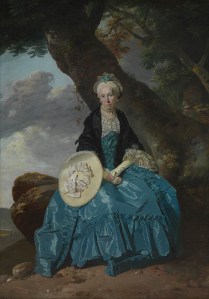

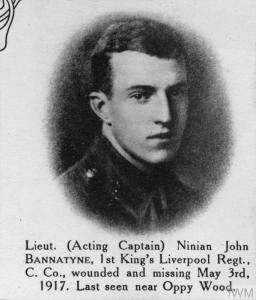

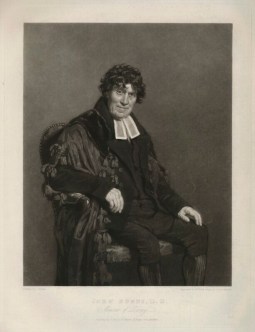

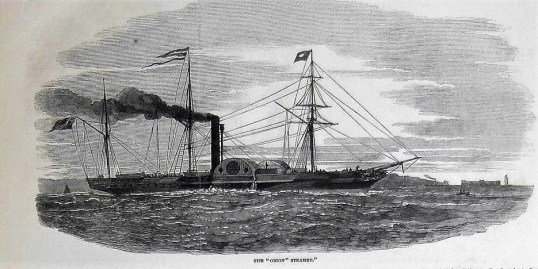
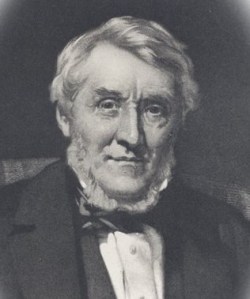
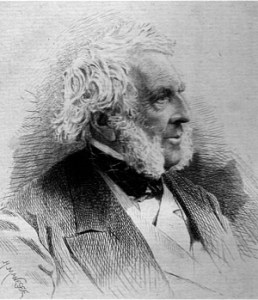





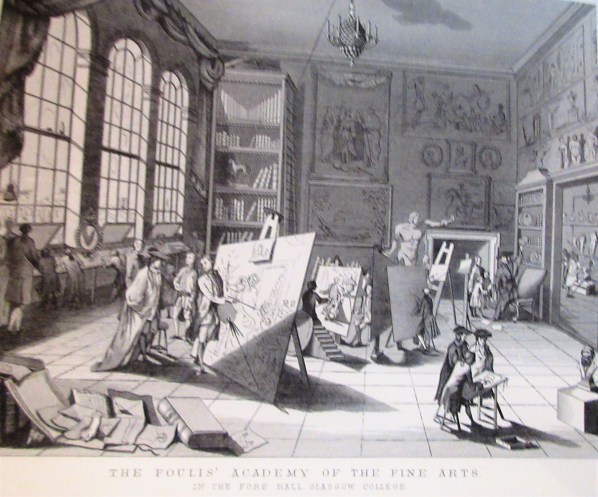


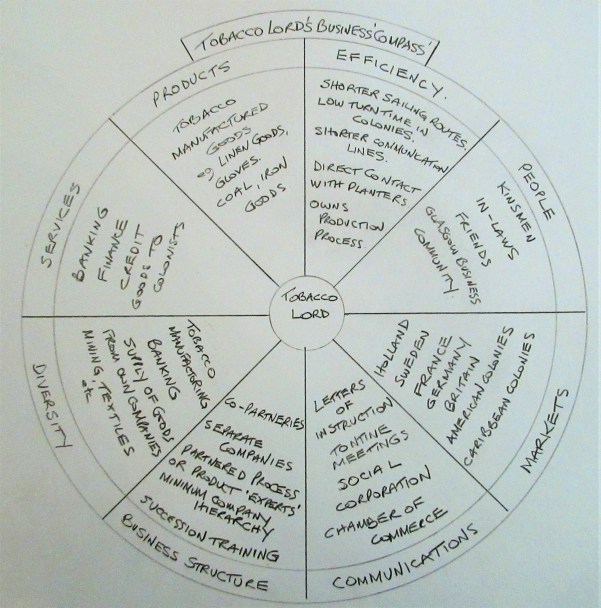
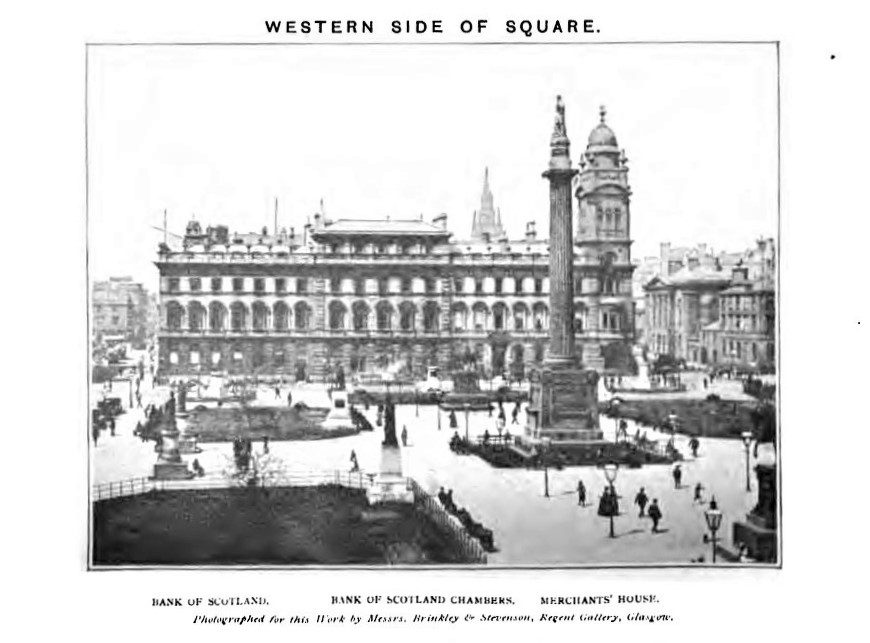

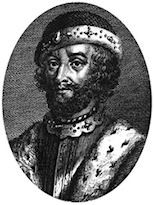
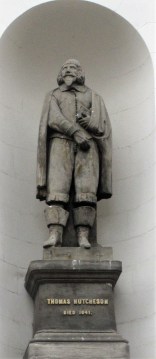

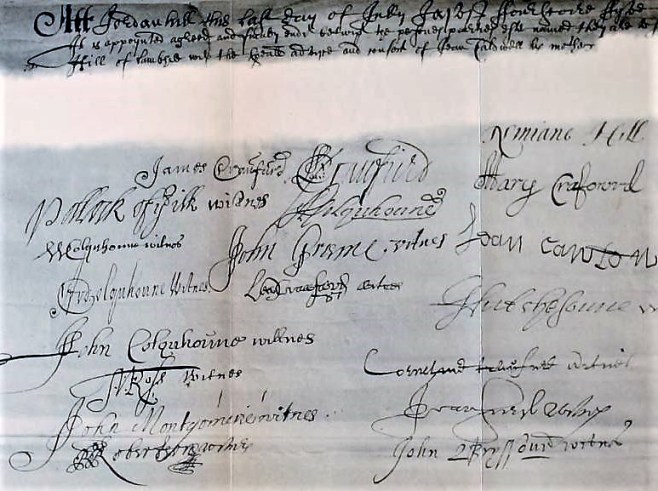

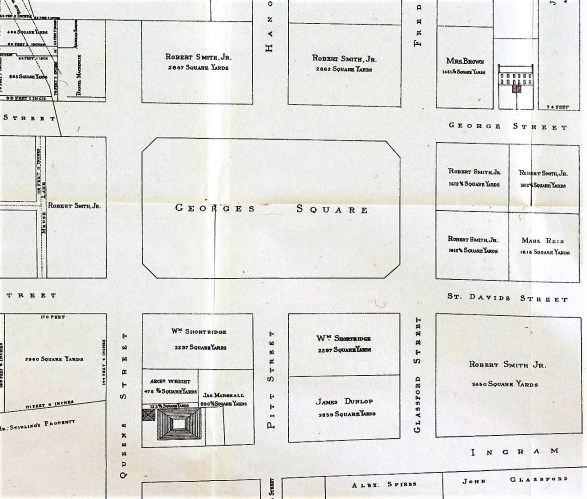
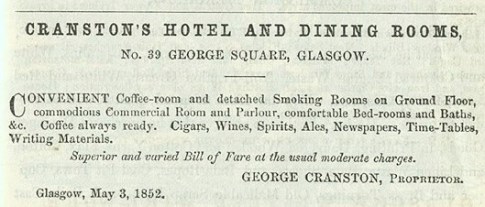
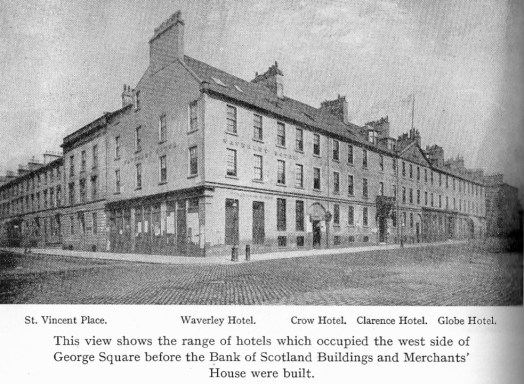

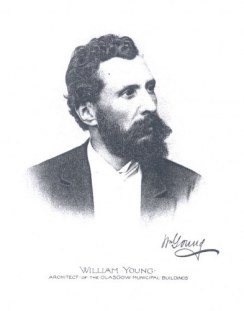
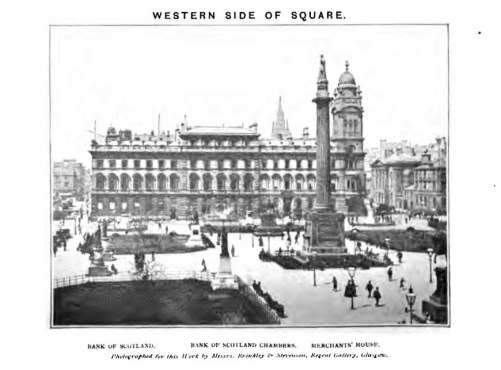
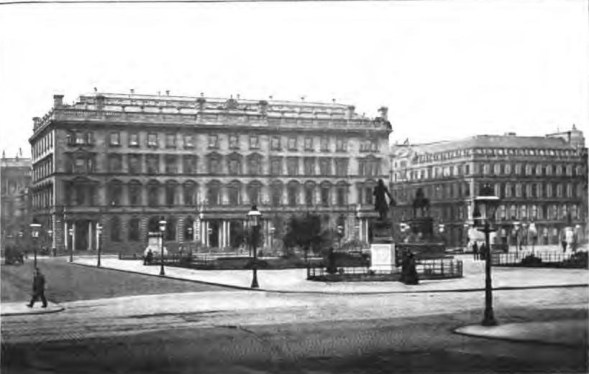


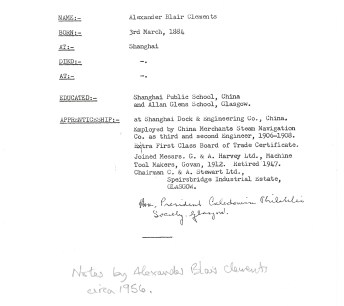


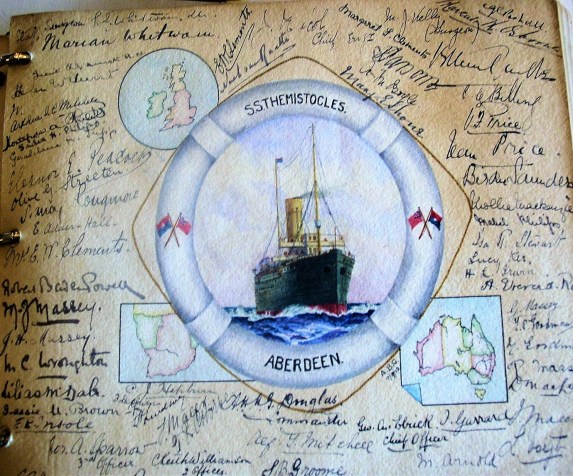
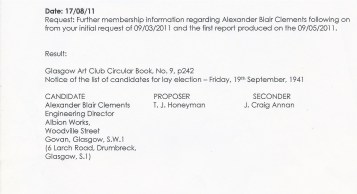
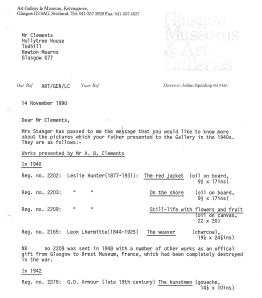
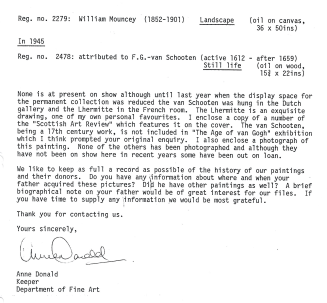


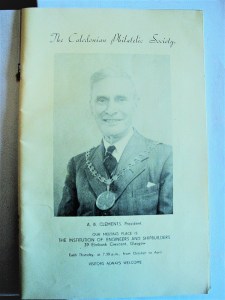

 Glasgow's Benefactors